What→
Cities must be honest with themselves regarding the future of peri-urban and inner-urban shopping centers: They are not all going to be saved. As the first wave of suburbanization hit American cities, the drive-to strip mall usurped the traditional corner store. However, initially, these centers weren’t as isolative as our current big-box landscape. The "first-wavers" of 1940s and 50s suburbia were often closer to the street, integrated into semi-walkable neighborhoods, and built on a human scale. Unlike the mega-malls of the 1990s, these older, inner-ring greyfields are often ripe for redevelopment.
As the first wave of suburbanization hit American cities, the drive-to strip mall usurped the traditional corner store. However, initially, these centers weren’t as isolative as our current big-box landscape. The "first-wavers" of 1940s and 50s suburbia were often closer to the street, integrated into semi-walkable neighborhoods, and built on a human scale. Unlike the mega-malls of the 1990s, these older, inner-ring greyfields are often ripe for redevelopment.
But here is the hard truth: Simply pointing at a dead mall and saying, "Let’s turn this into a mixed-use lifestyle center!" is a recipe for failure.
Cities need to stop the "Spray and Pray" approach, zoning everything as a Planned Unit Development (PUD) and hoping a developer saves them. Instead, we need a rigorous methodology to decide what can be saved, what should be maintained, and what needs to be returned to nature.
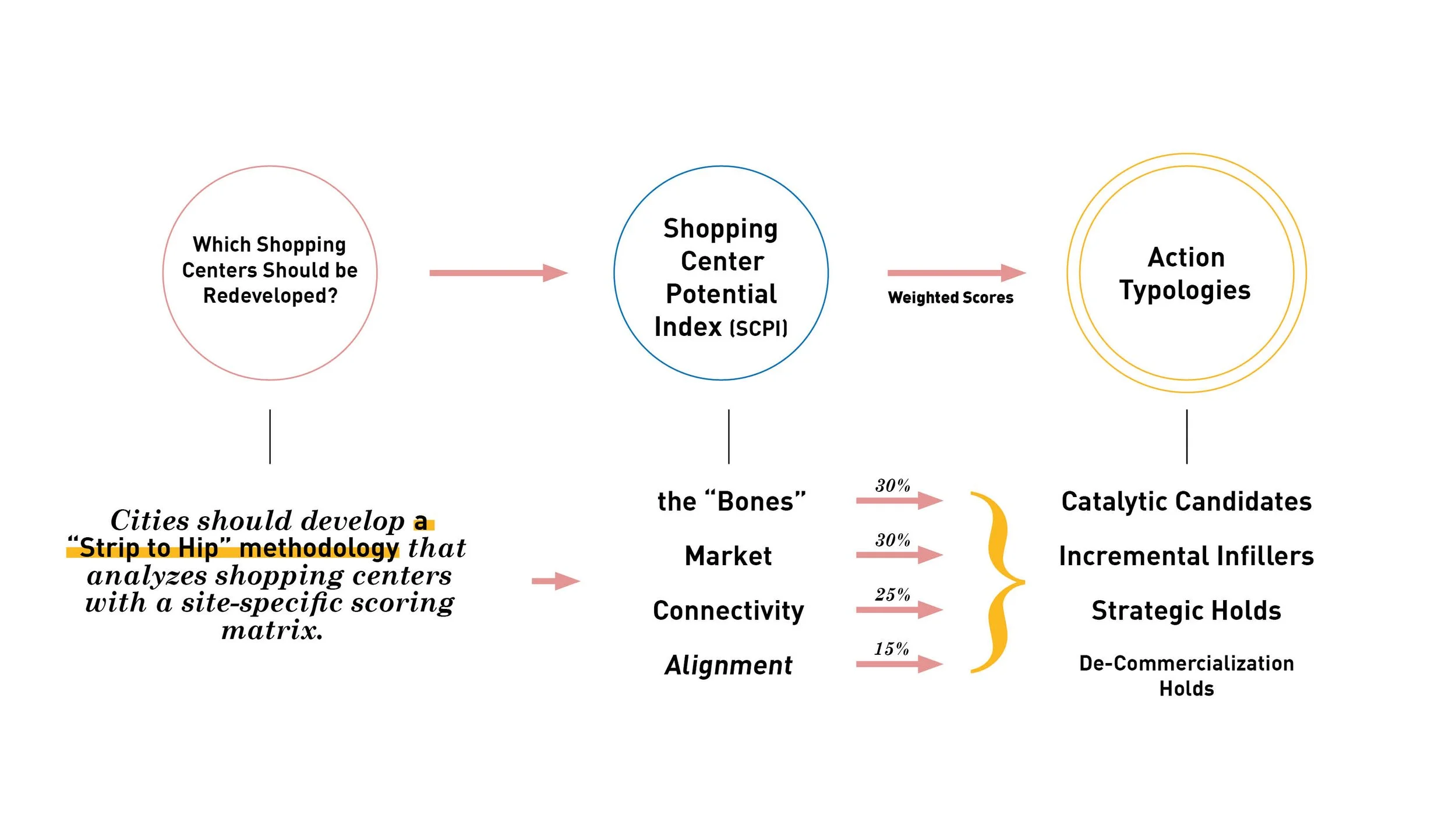
We call this methodology "Strip to Hip." This analysis determines what shopping center should be saved. Then our Mall to Village Model creates the framework to redevelop the most catalytic sites.
Malls to Villages
North America
Key Services:
→ Economic Development Strategies
→ Development Scenario Planning
→ Comprehensive & Neighborhood Planning
→ Corridor & District Frameworks
Writing:
I Want My MTV (Mall to Village): A 6-Step Guide to Retrofitting Suburbia
To Each Mall According its Potential
A Shopping Center Potential Index (SCPI) is a multi-variable scoring matrix to identify and promote the redevelopment of shopping centers. This assessment would set a baseline measurement of what is construed as a shopping center (by size or typology), then set available and measurable criteria to understand the potential of reuse, capacity, and future demand to match city policy with efficient development priorities.The city as a public entity cannot force private market activity, but it could certainly align its planning priorities to reflect what staff has analyzed as creating the most bang for their buck.
Cities all over North America are dealing with depleted revenues, and reassessments favoring property owners. Local leaders owe it to themselves and their futures as leaders to ensure spare municipal resources are being maximized. That means less cheap wins of a Wawa and more long-term strategy that prioritizes potential. The "spray and pray" approach (zoning everything a planned unit development and hoping for the best) dilutes the market and strains municipal resources. A SCPI allows a municipality to pick winners (where intervention triggers real ROI) and manage the losers (where limited resources should not be wasted).
Cities could easily assign these scores to individual retail sites, then review the trends from above on a mapping software such as GIS.
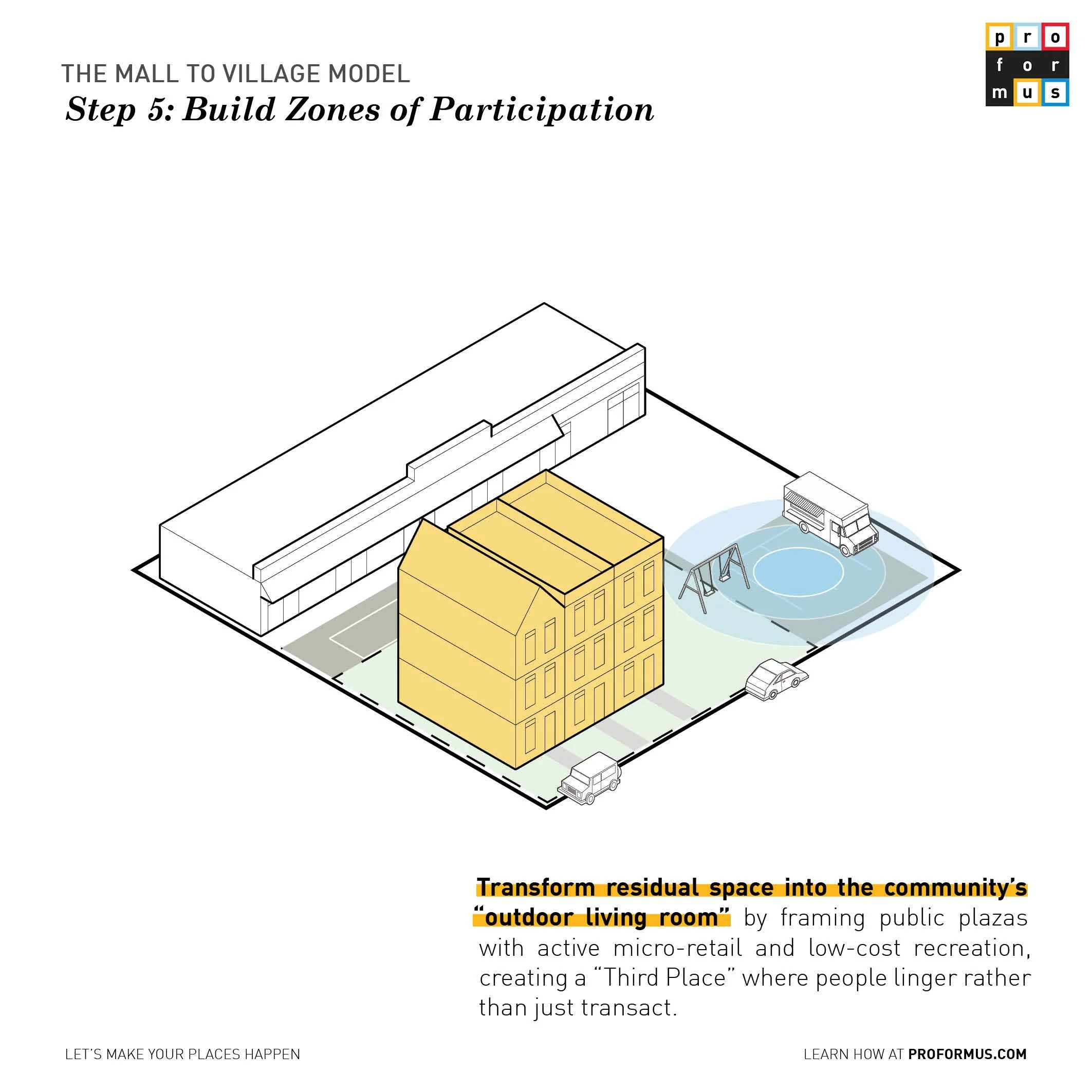
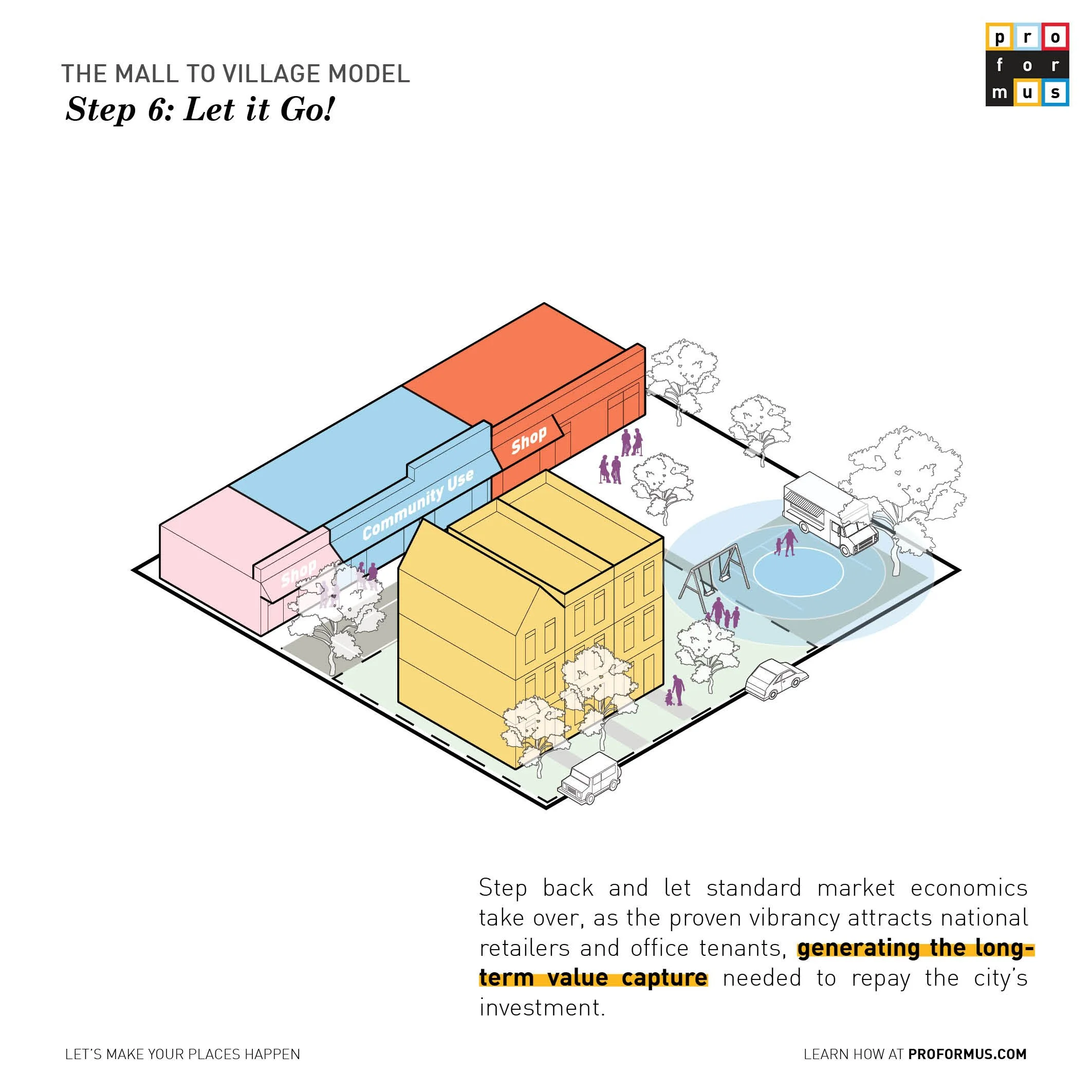
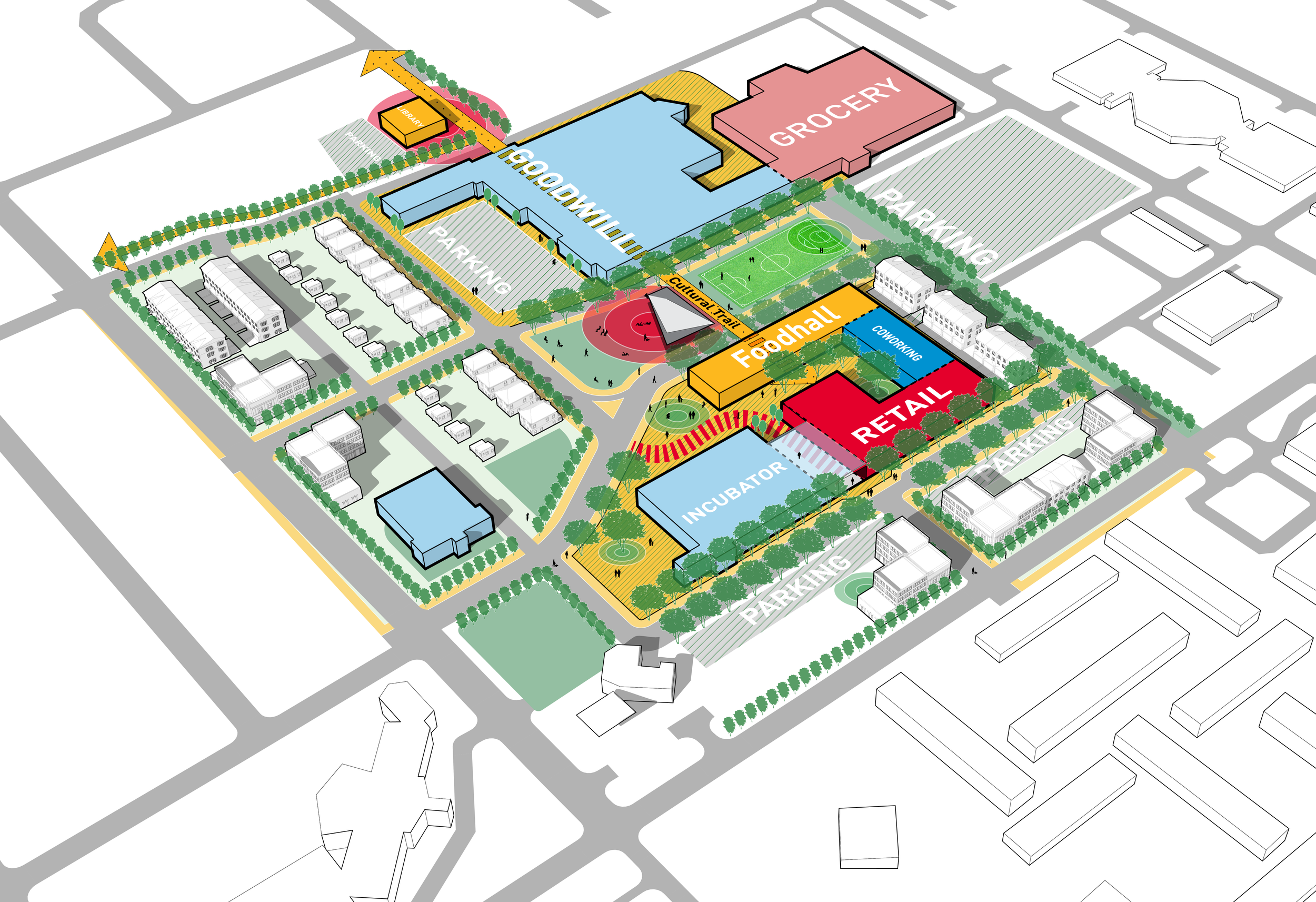
The Mall to Village Model in 6 Steps
For a mall to qualify for the full MTV treatment, it must score as a Tier 1: Catalytic Candidate. In this specific case, the SCPI flagged the site as a prime target because it passed the “Fatal Flaw” filter, avoiding the nightmare of fragmented, condo-ized ownership, and scored high in Bucket B (Market & Demographics). The data revealed a massive arbitrage opportunity: the surrounding 1-mile radius had high residential density and growing income, yet the site suffered from extreme “Retail Leakage.” In short, the algorithm confirmed a town was trying to get out, but the building or parcel was holding it back.
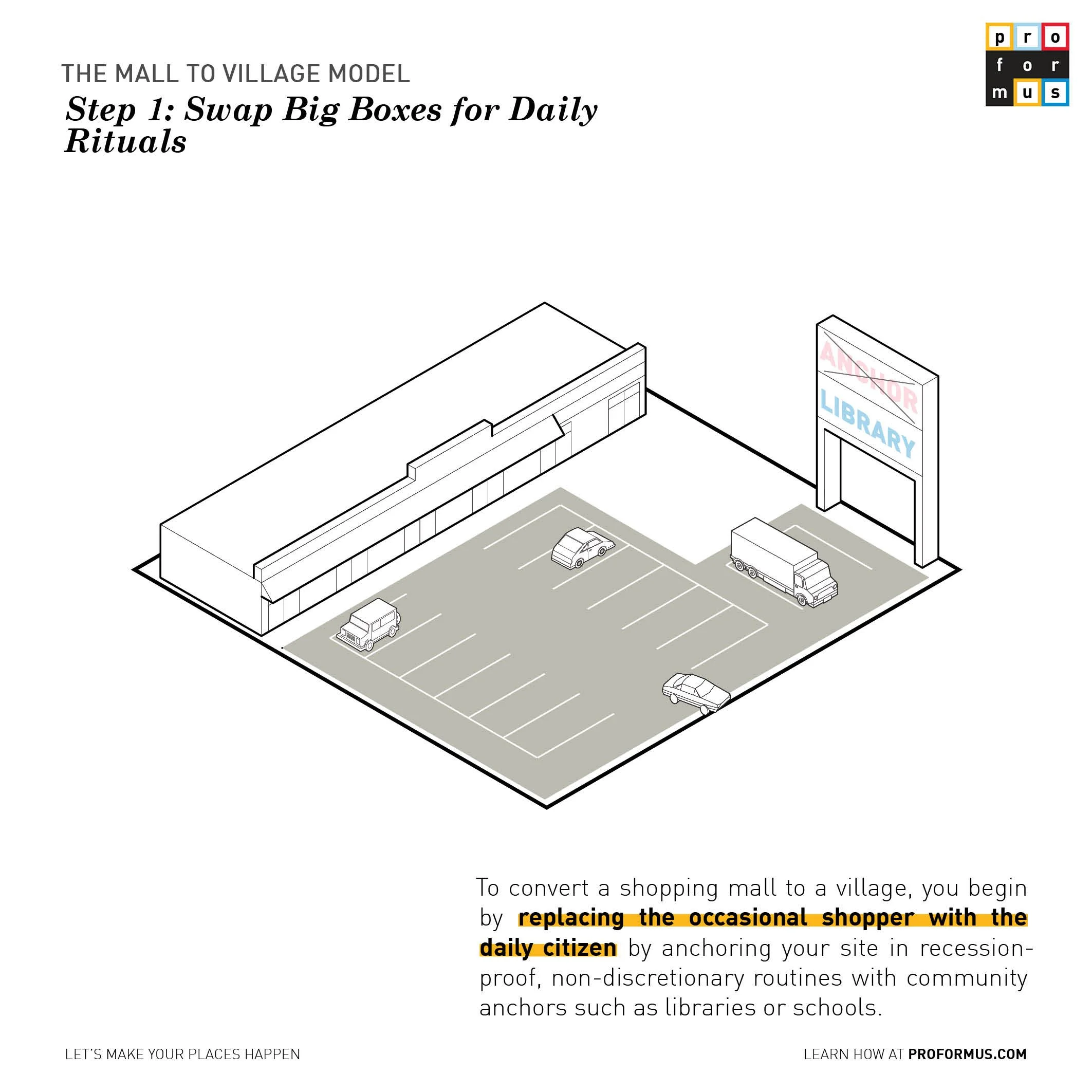
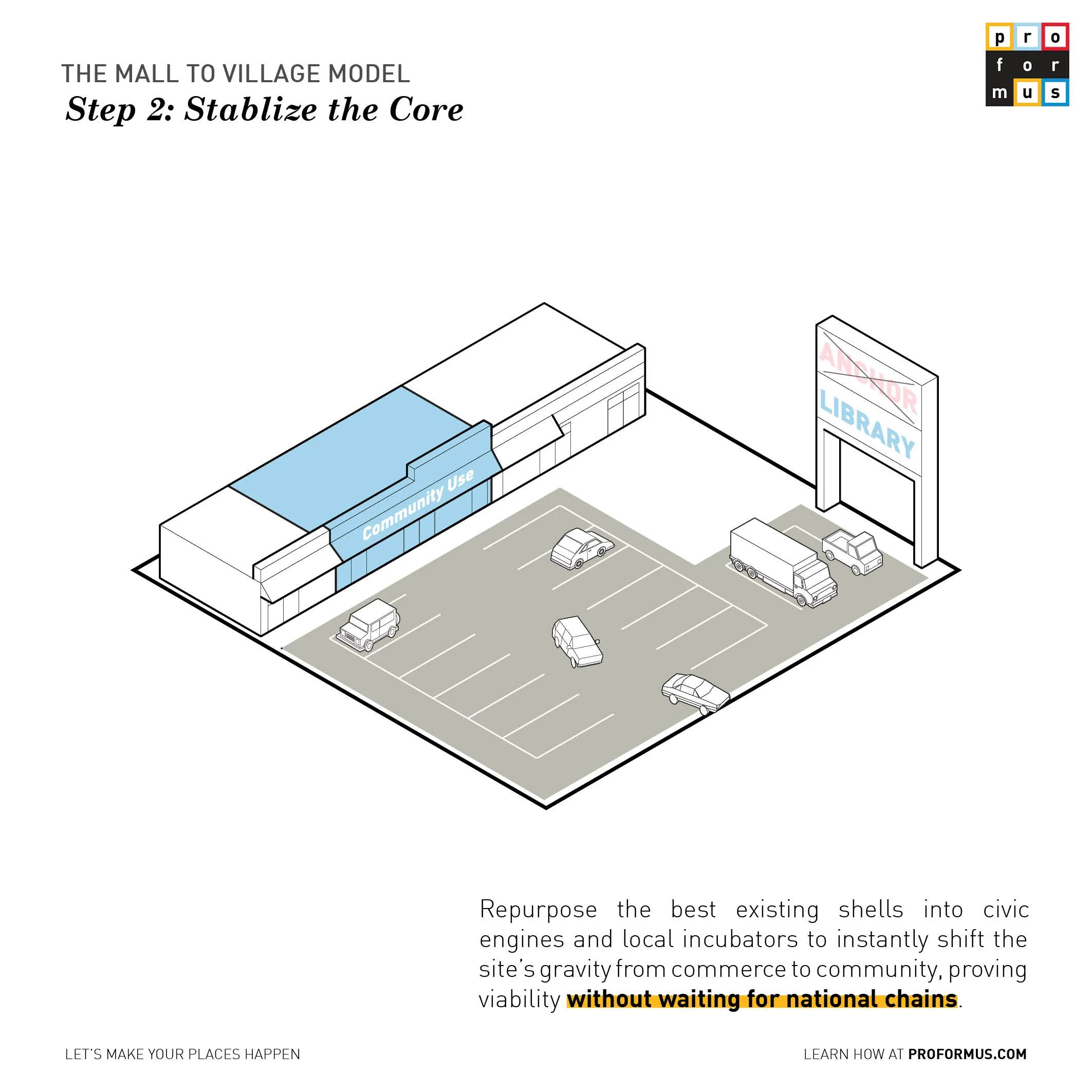
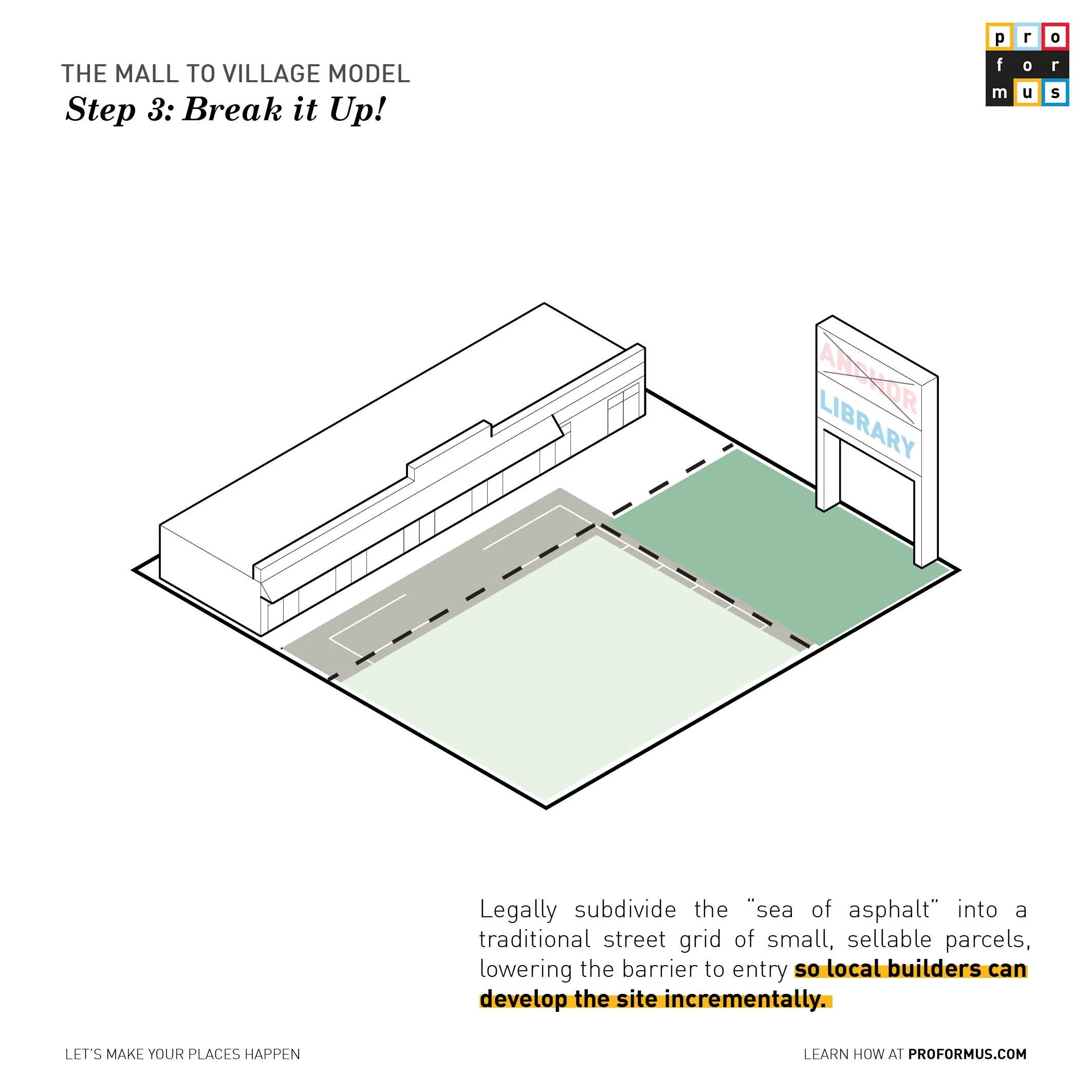
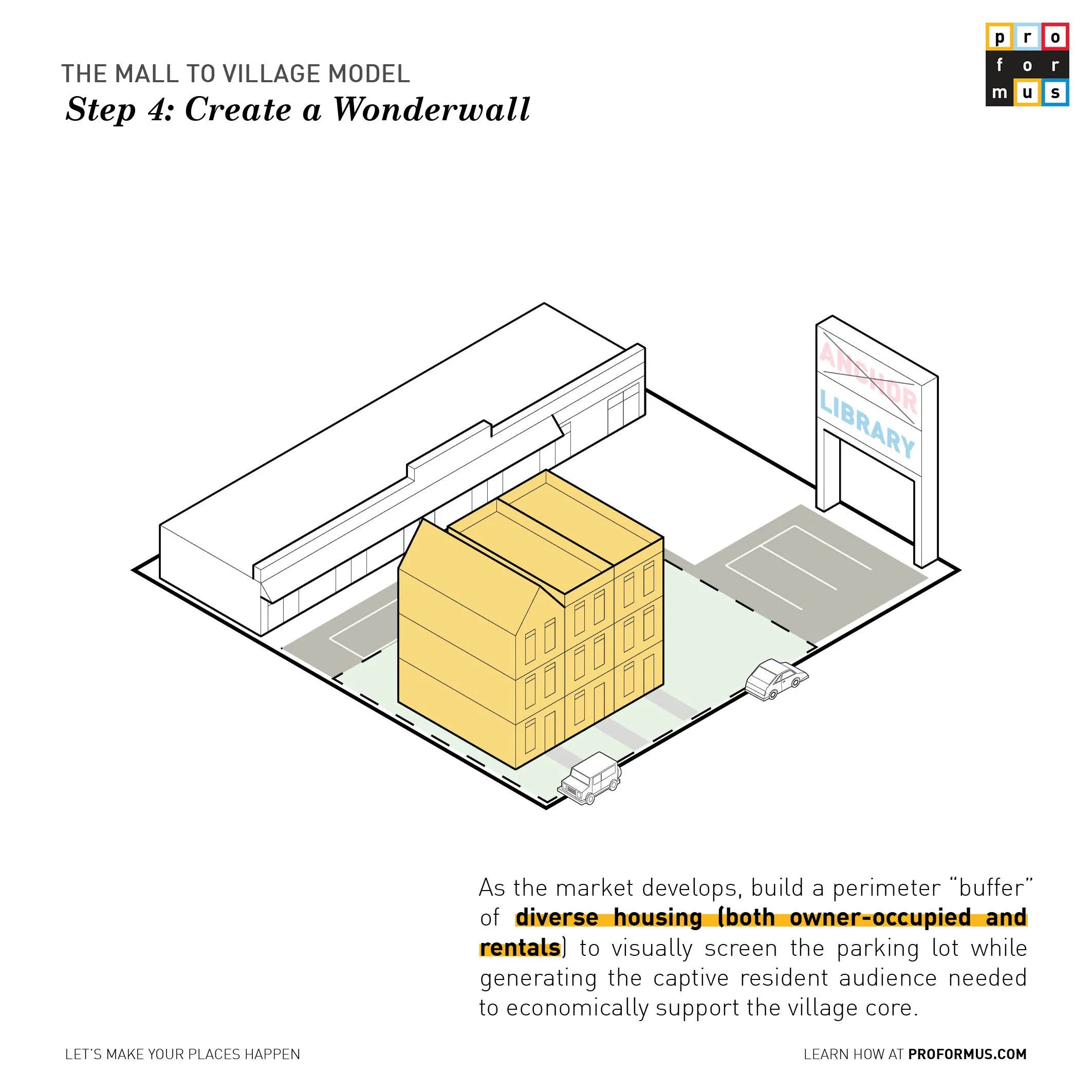
If you’ve gotten this far, it means our shopping center may just be perfect for the Mall to Village (MTV) six step strategy. Here we go.
Click through to learn more. And get in touch if your city needs a retail strategy of their own.