10th Street Corridor Strategy
Indianapolis, Indiana
Key Services:
→ Development Scenario Planning
→ Corridor & District Frameworks
→ Urban Design & Concepts
→ Zoning Strategy & Policy Alignment
→ Graphic Design
Partners:
What→
Rebuilding a Main Street from the Inside Out.
Proformus is partnering with John Boner Neighborhood Centers and 10 East Arts to develop a corridor strategy for East 10th Street, one of Indianapolis's oldest and most storied commercial spines, now at the center of a convergence of public investment, cultural district designation, and community-driven planning.
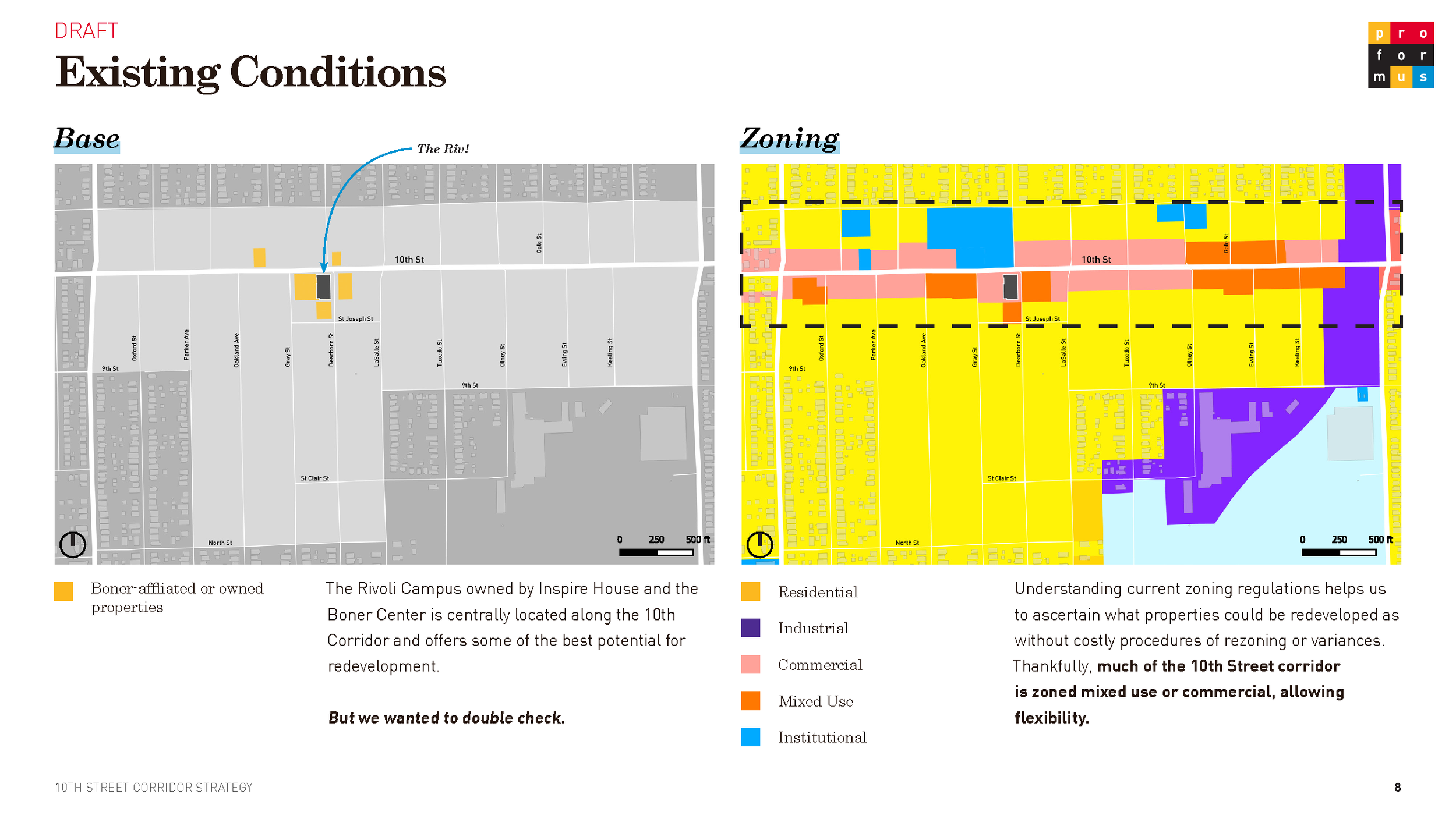
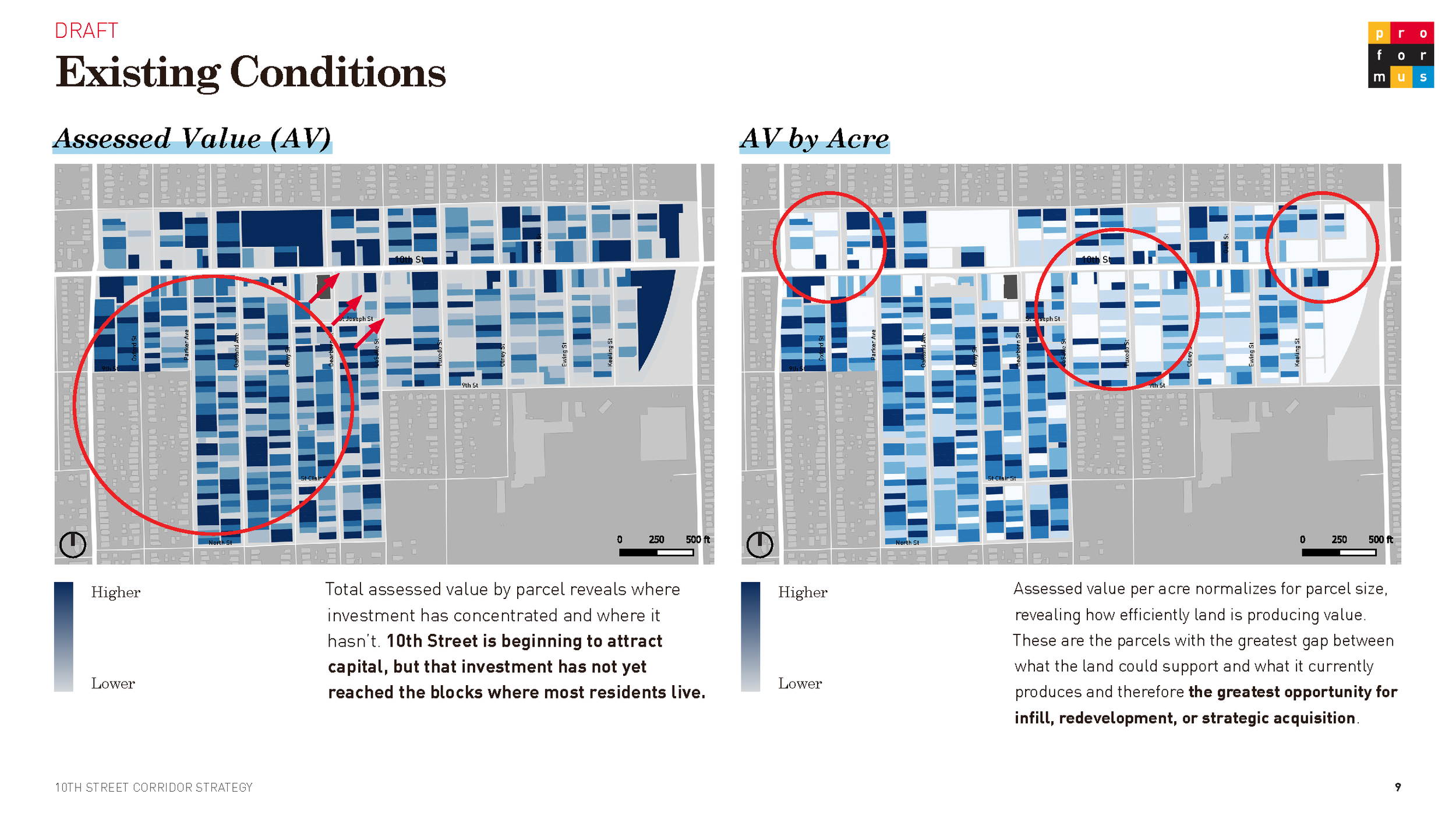
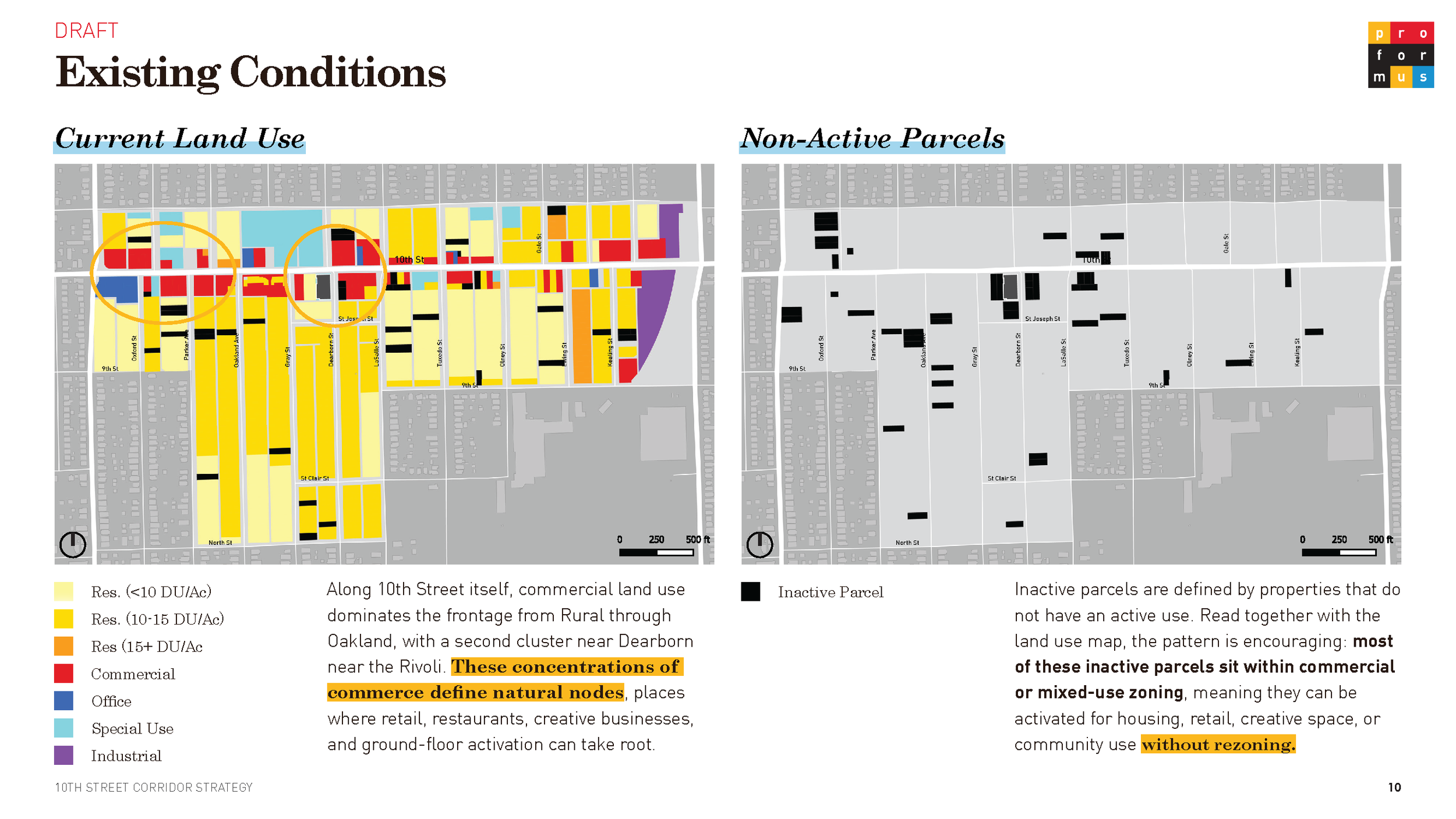
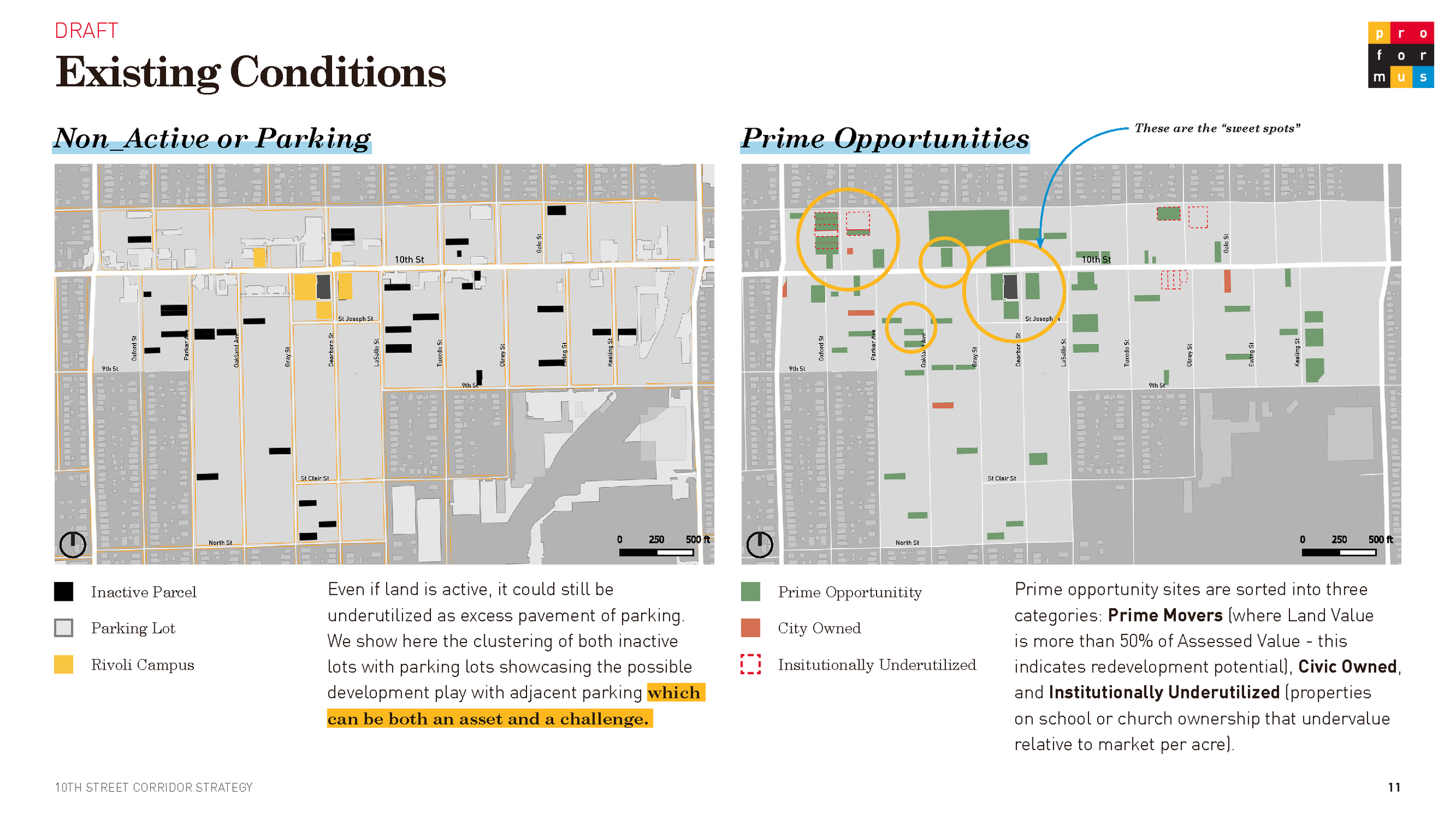
Our work translates decades of neighborhood advocacy into a spatial framework the corridor can build from: existing conditions analysis, assessed value and land use mapping, catalytic site identification, infill housing pro formas, and development scenarios that show what smart-density, community-controlled growth looks like on real parcels with real numbers. At the center of the strategy sits the Rivoli Theatre, a 1927 landmark whose restoration is funded not by a single grant but by a portfolio of small mixed-use buildings that generate a self-sustaining endowment.
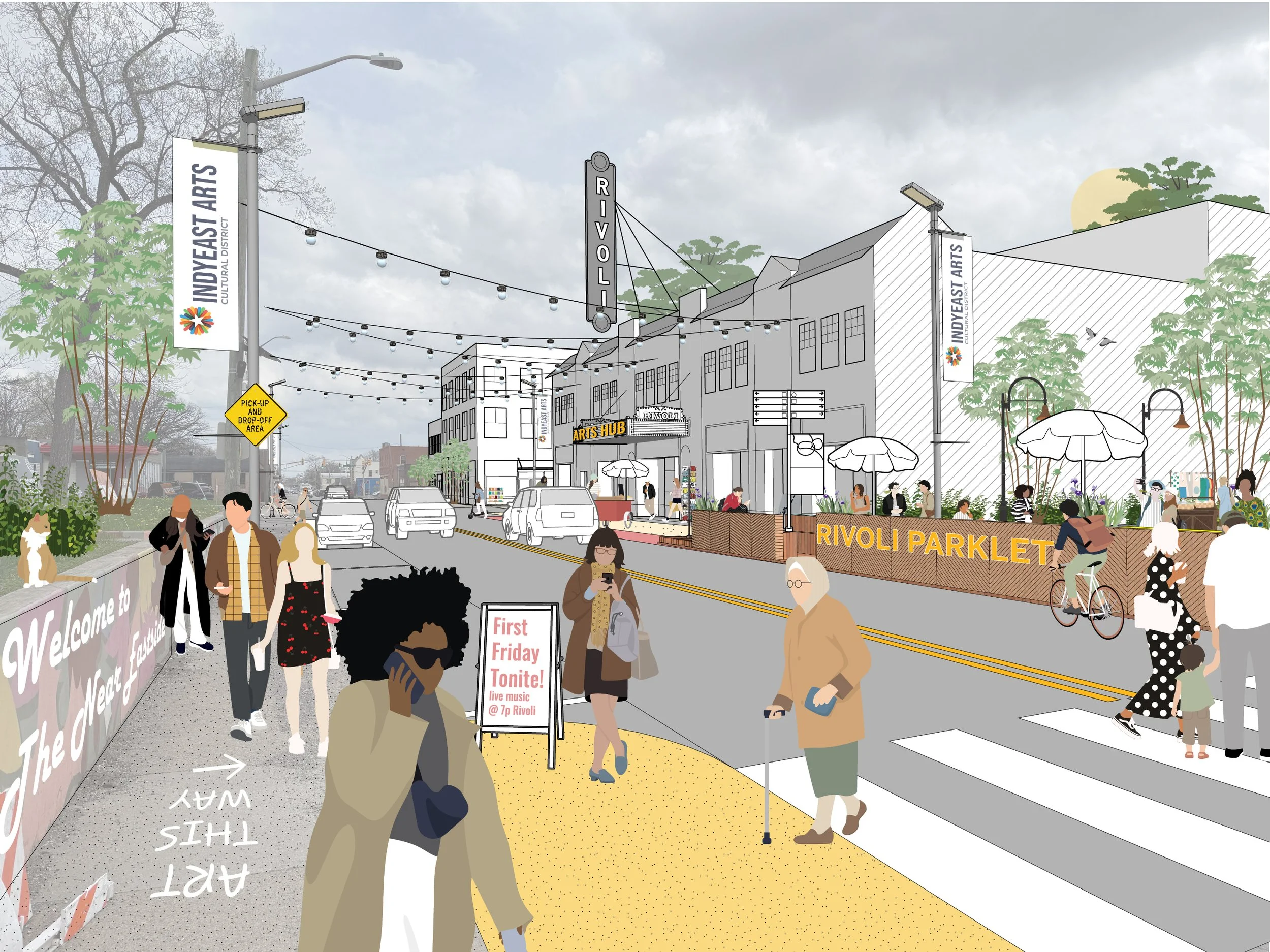
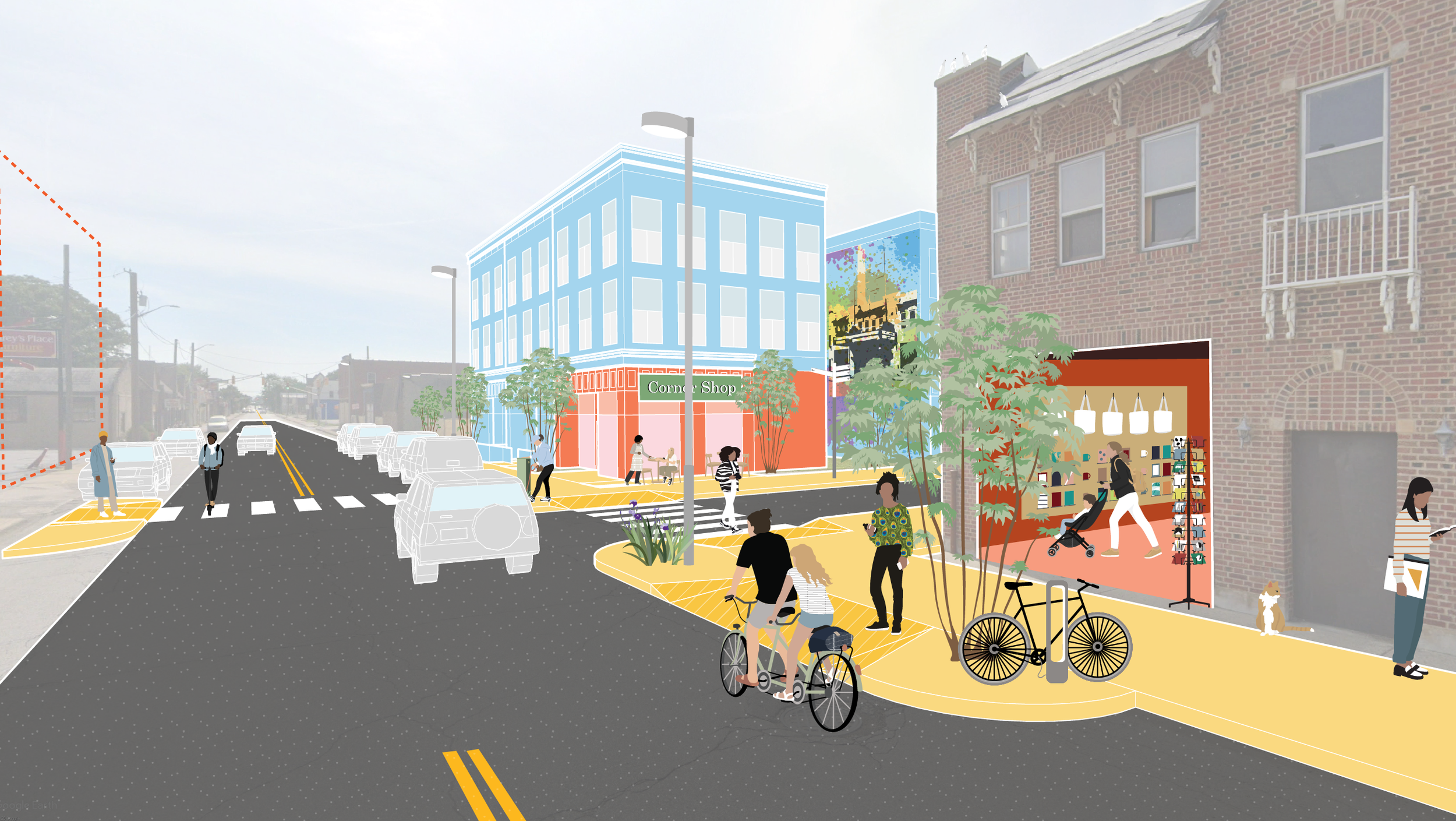
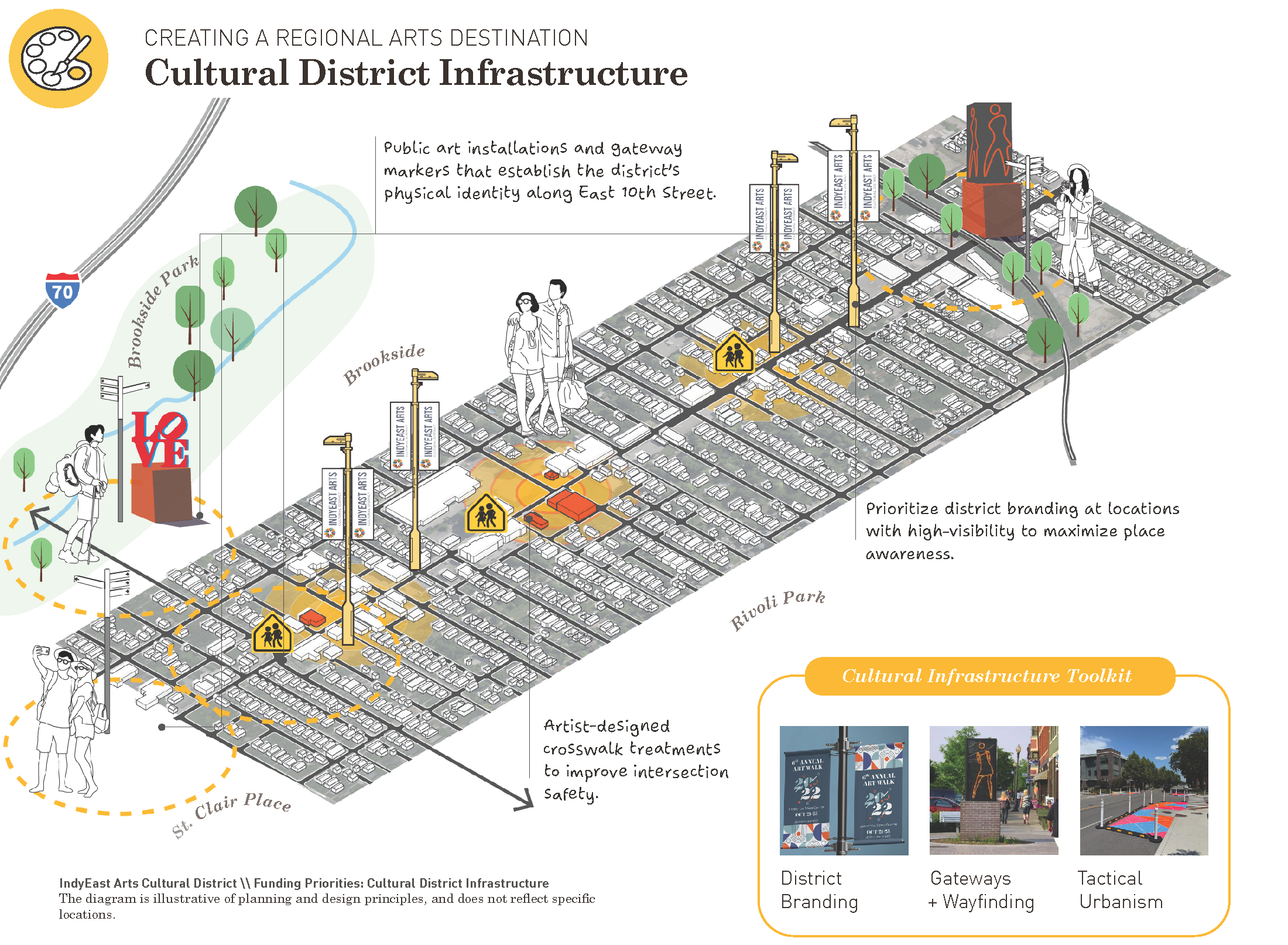
This collaboration reflects a conviction we share with our partners: that corridor strategy should not just analyze conditions but change them. By connecting infill housing, traffic calming, arts-based placemaking, and school safety into a single legible system, the East 10th Street Corridor Strategy helps a neighborhood that has endured decades of disinvestment see what its next chapter looks like — and who gets to write it.

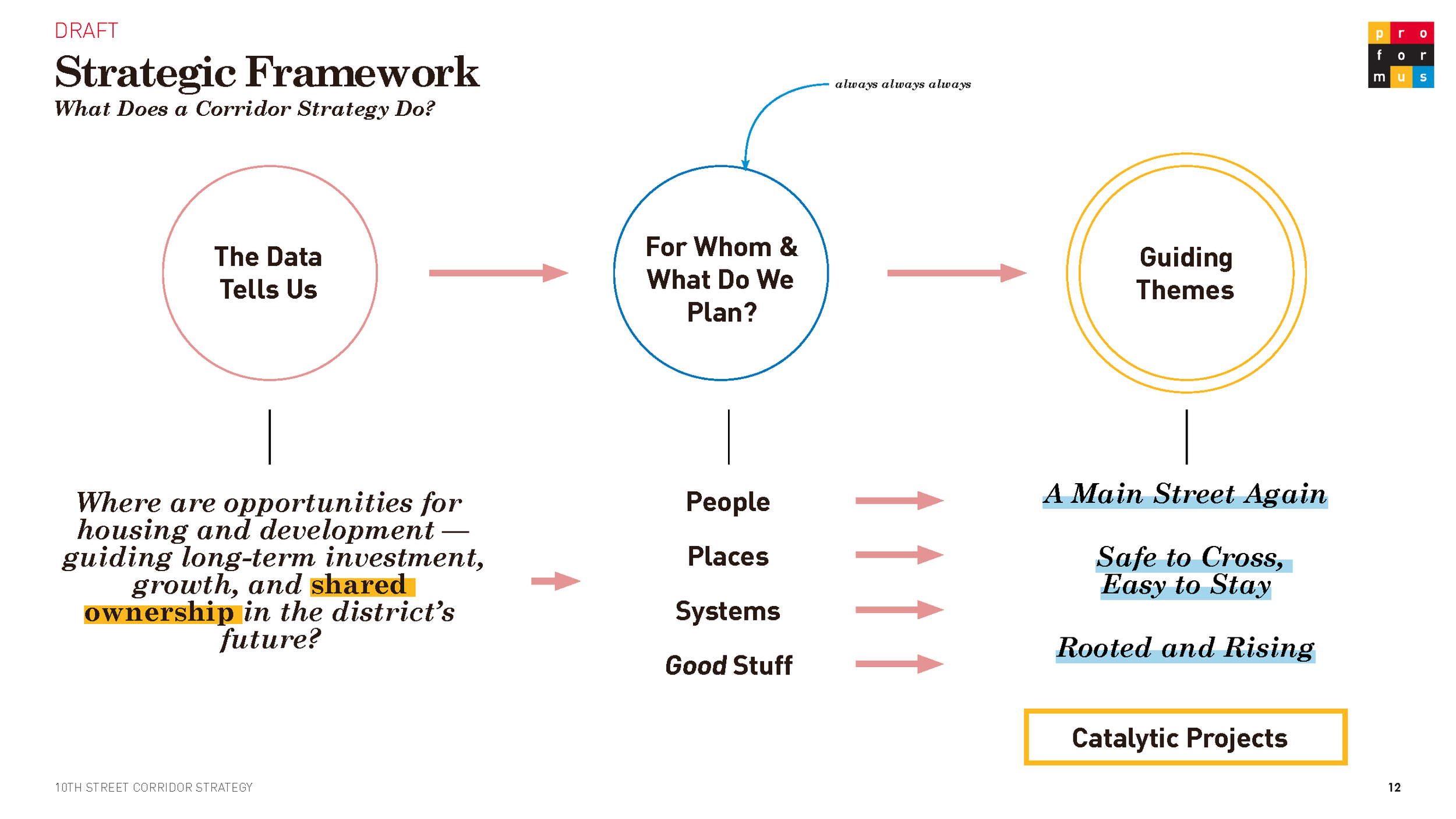
The East 10th Street Corridor Strategy moves from evidence to action through a clear three-step logic. Corridor data (things like building stock, ownership patterns, mobility gaps, demographic change) surfaces the central question: where are the opportunities for housing and development that can guide long-term investment, growth, and shared ownership in the district's future?
Shared ownership is the non-negotiable variable, the test for whether reinvestment compounds for current residents and small businesses or displaces them.
From there, the framework asks for whom, and what, do we plan? always.
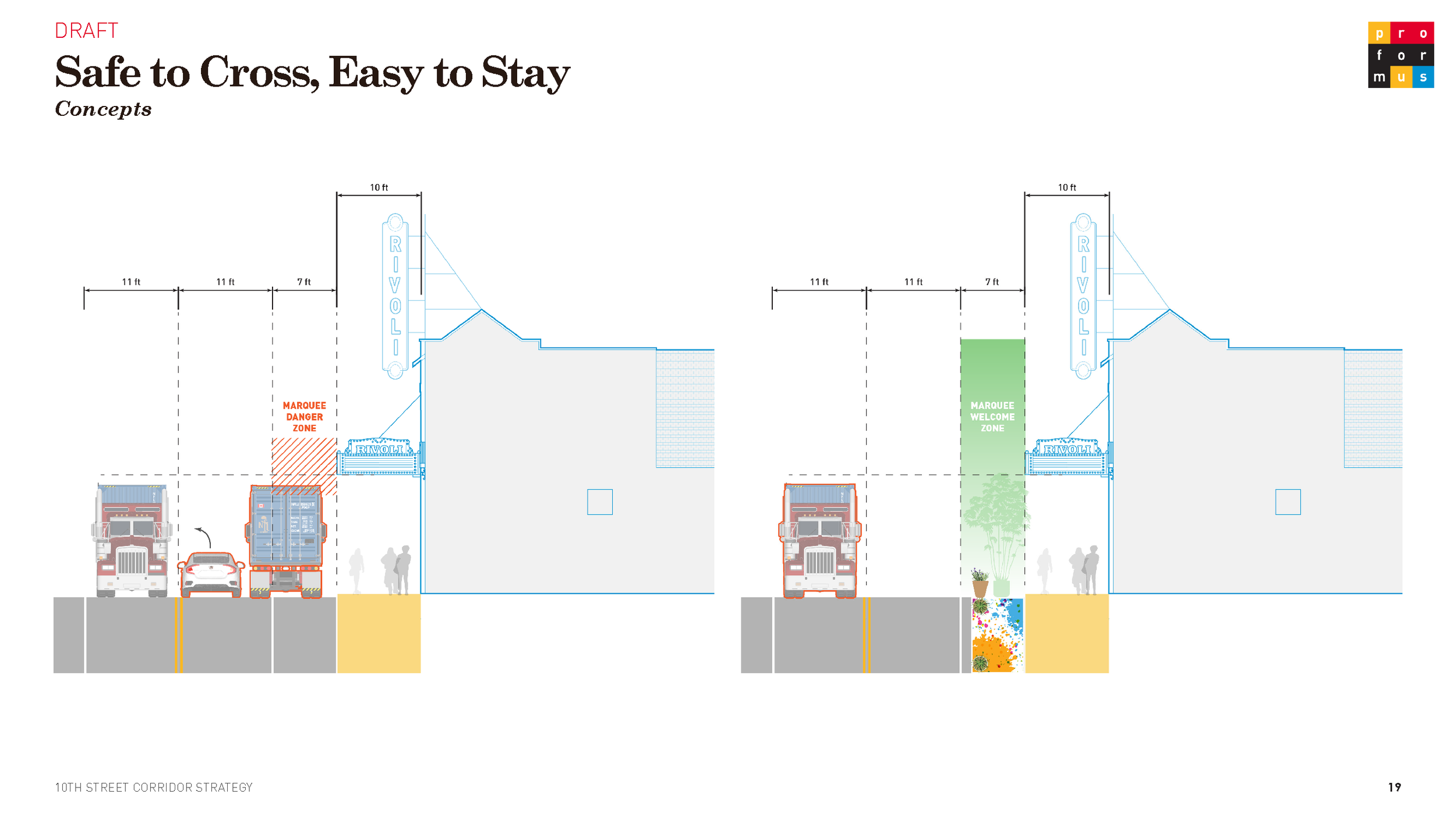
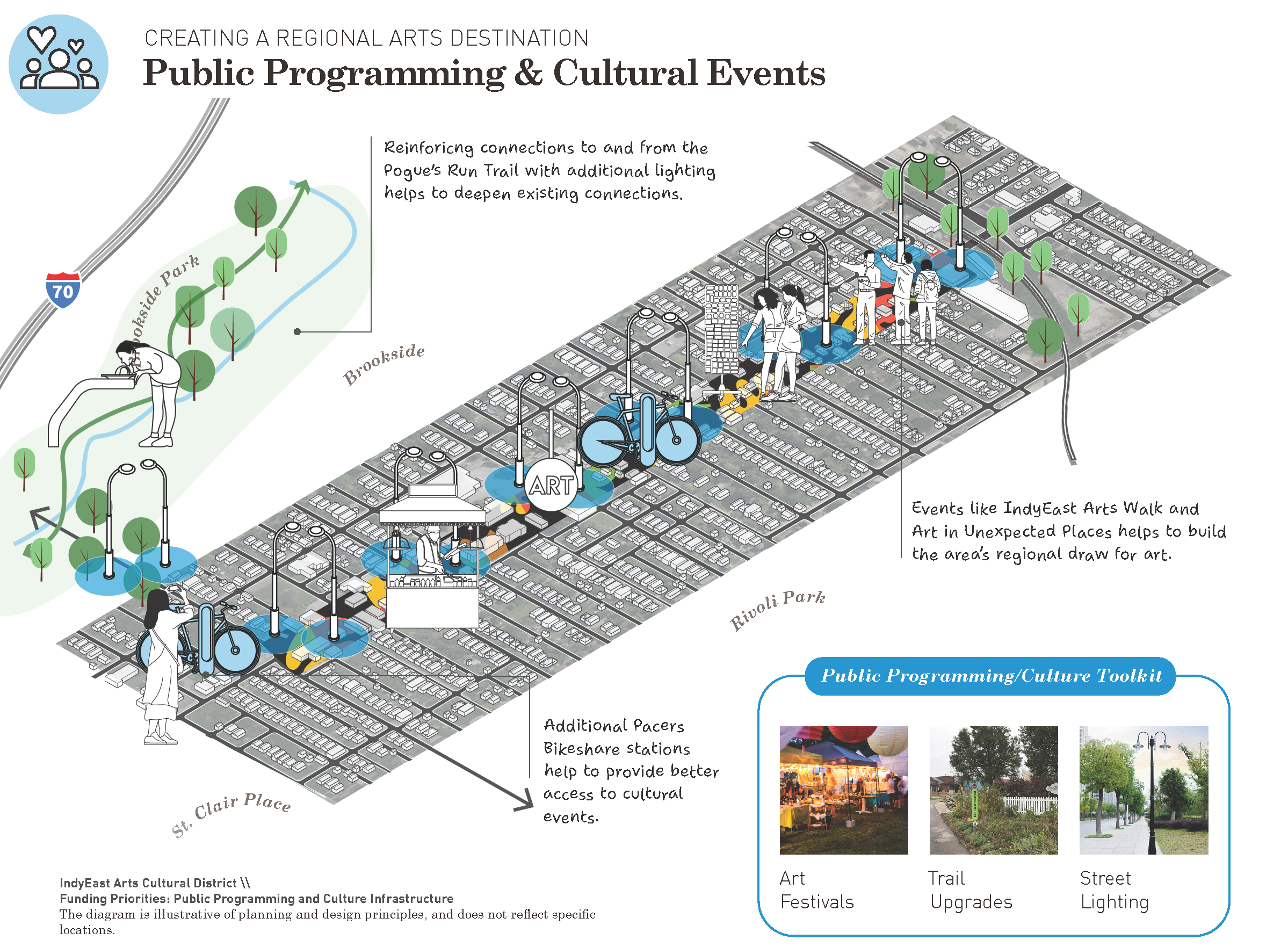
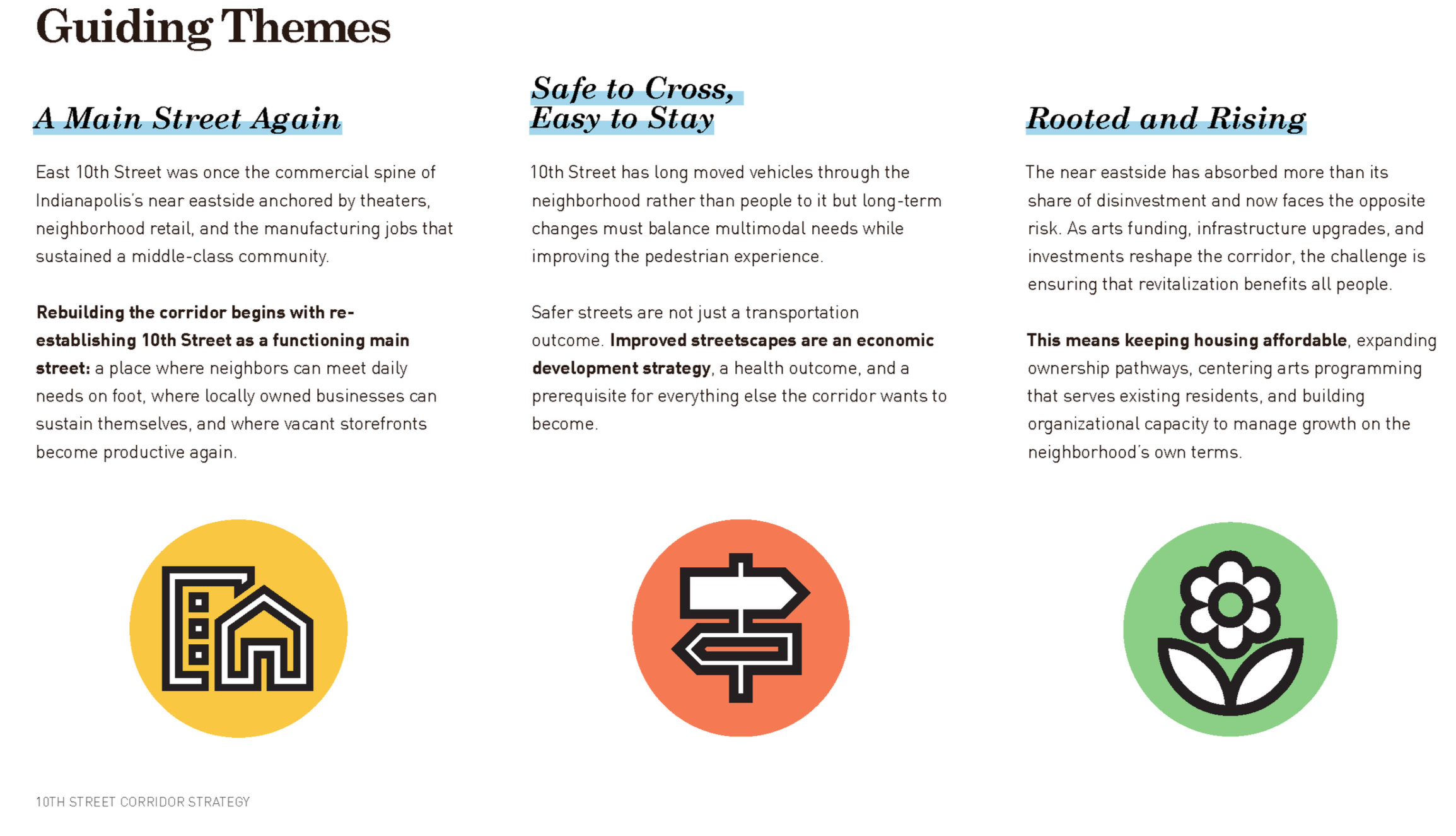
Our planning runs through four lenses: People, Places, Systems, and the Good Stuff. Those lenses resolve into three guiding themes (A Main Street Again, Safe to Cross, Easy to Stay, and Rooted and Rising) that in turn drive a slate of Catalytic Projects: specific, fundable, parcel-level interventions that show what the strategy means on the ground across the 10East Arts Cultural District.
:)