
Development Strategy · Urban Planning · Codes & Ordinances
Urban Farms Toolkit
North America
What
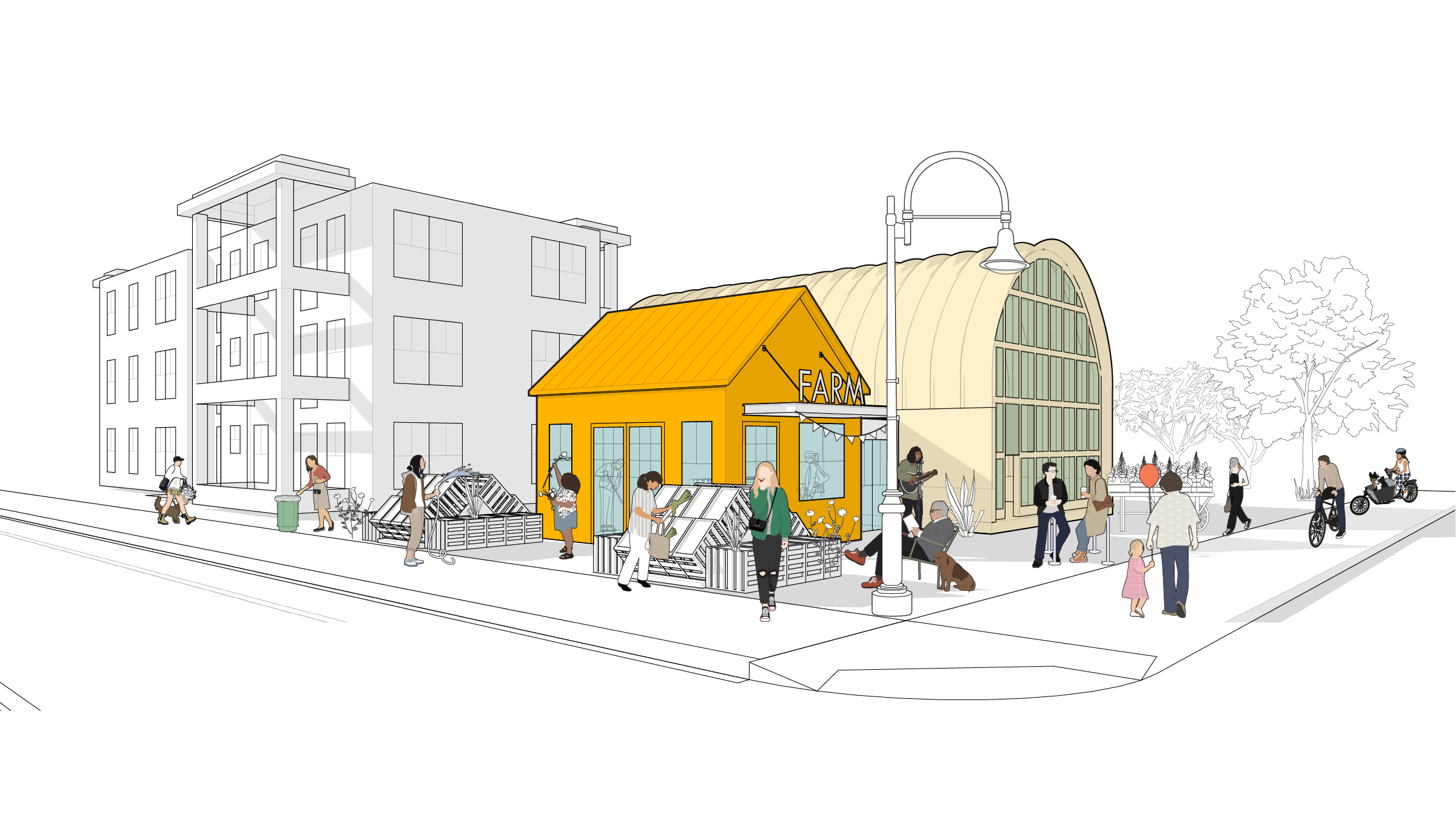
Urban farming represents a strategic shift in land use: localized food production designed for the modern city. From indoor systems to adapted urban spaces, this model transforms underutilized real estate into productive assets that provide fresh herbs, fruits, and vegetables while driving hyperlocal economic growth. American cities are currently sitting on a vast archipelago of dormant assets. By unlocking specific land types, local governments can drive a new model of adaptive infill that grows food locally, incubates small businesses, and recirculates capital within neighborhoods… …if they zone for it.
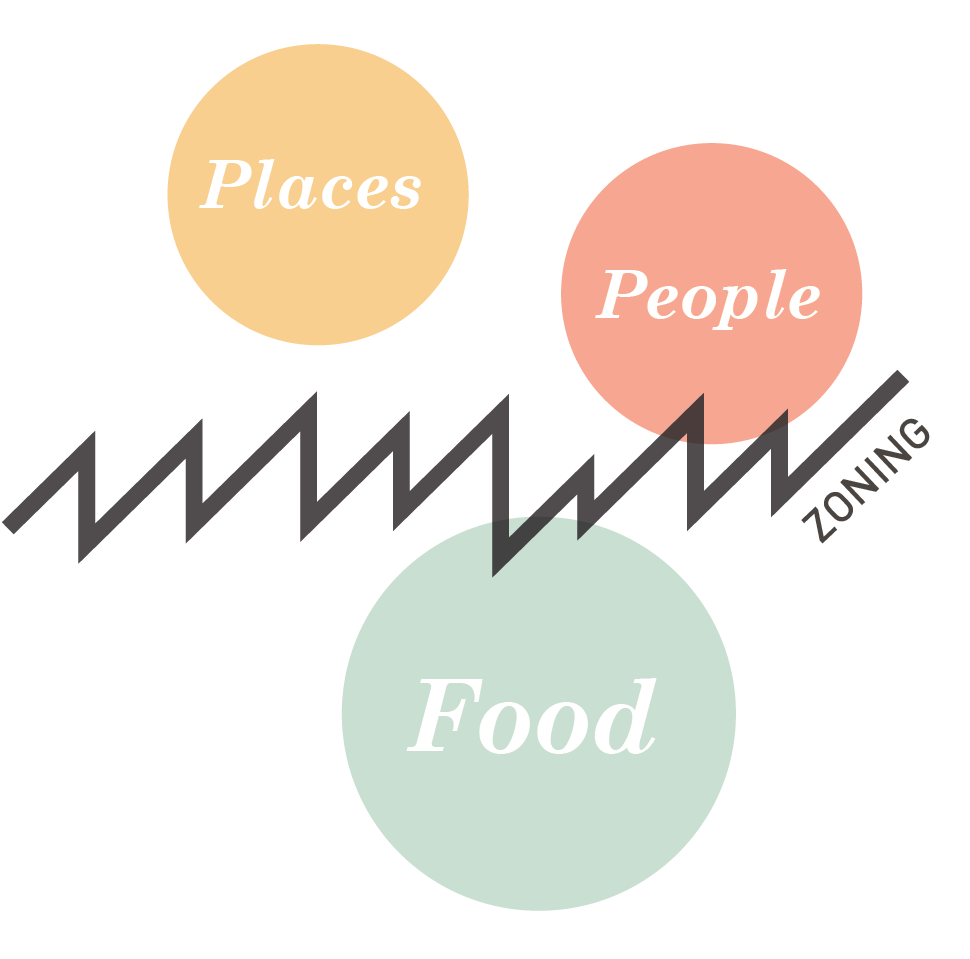
Here's the rub: a century ago, many American cities grew with and around farms — food systems were local, seasonal, and woven into the urban fabric. Over time, zoning laws, industrial agriculture, and suburban expansion pushed farming to the periphery. Modern zoning has inherited a "Euclidean" bias, misclassifying climate-controlled indoor farming as heavy industry and forcing entrepreneurs into the "CUP Trap" — a discretionary conditional review process that adds 20–30% to startup costs and scares off private investment.
The Urban Farms Toolkit offers strategic zoning reform designed to empower municipalities to turn underutilized land into productive food hubs — converting liabilities into assets that ensure food prosperity, economic stability, and community health.
Download the Toolkit ↓It's time to rethink what a farm can be.
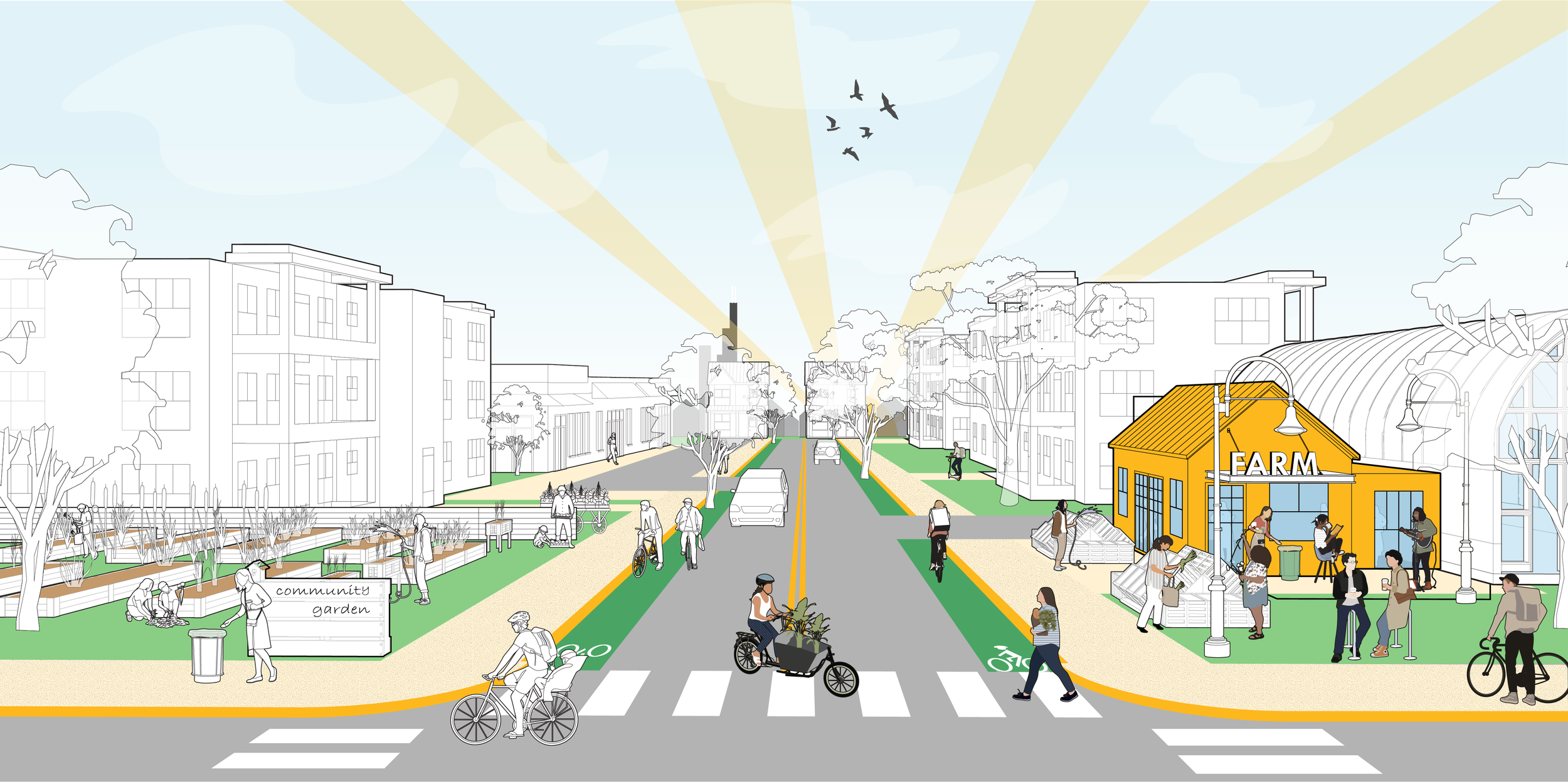
Farms can be neighborhood focused. They can be hyperlocal. They can fit within your block. It's time to reconnect people to food.
"An urban farm is a neighborhood-scale agricultural hub that pairs growing, harvesting, and on-site sales to strengthen local food access and economic vitality."
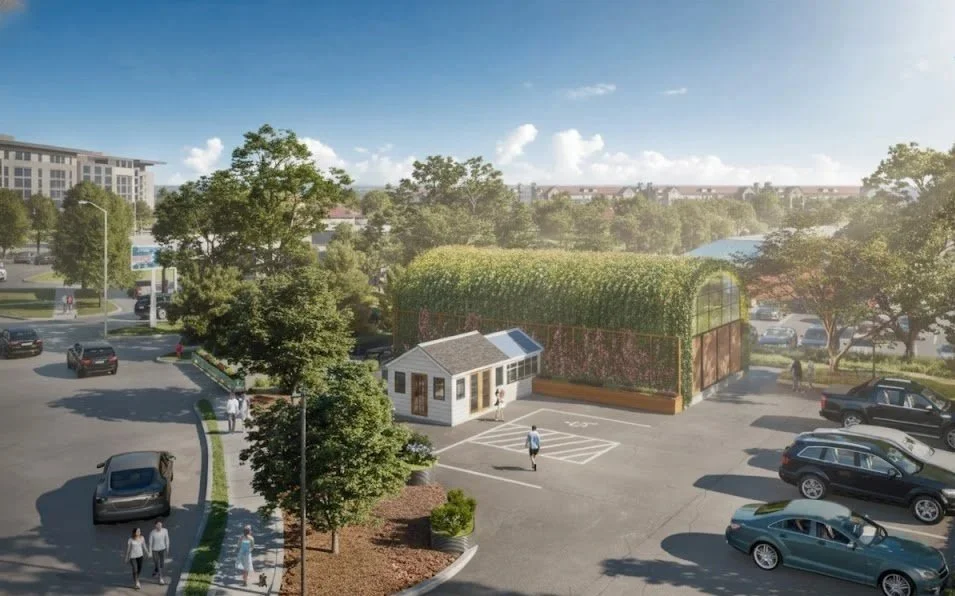
Move the farm, not the food
Food was once produced near where people lived. To understand the current regulatory barriers facing urban farms, one must first confront the history of American land use planning. Since the landmark Village of Euclid v. Ambler Realty Co. Supreme Court decision in 1926, municipal zoning has been dominated by the philosophy of "Euclidean zoning" — the separation of incompatible uses: heavy industry segregated from residential neighborhoods to protect public health, commercial districts buffered from manufacturing.
Agriculture, in this framework, was categorized as a rural land use — land-intensive, odor-producing, and chaotic, all qualities diametrically opposed to the ordered, dense nature of the city. As cities expanded, agriculture was pushed to the periphery, and municipal codes were written to explicitly exclude "farming" from residential and commercial zones, often defining it by the presence of livestock, manure, and heavy machinery.
The codes have not kept up with the possibilities of modern indoor technology.
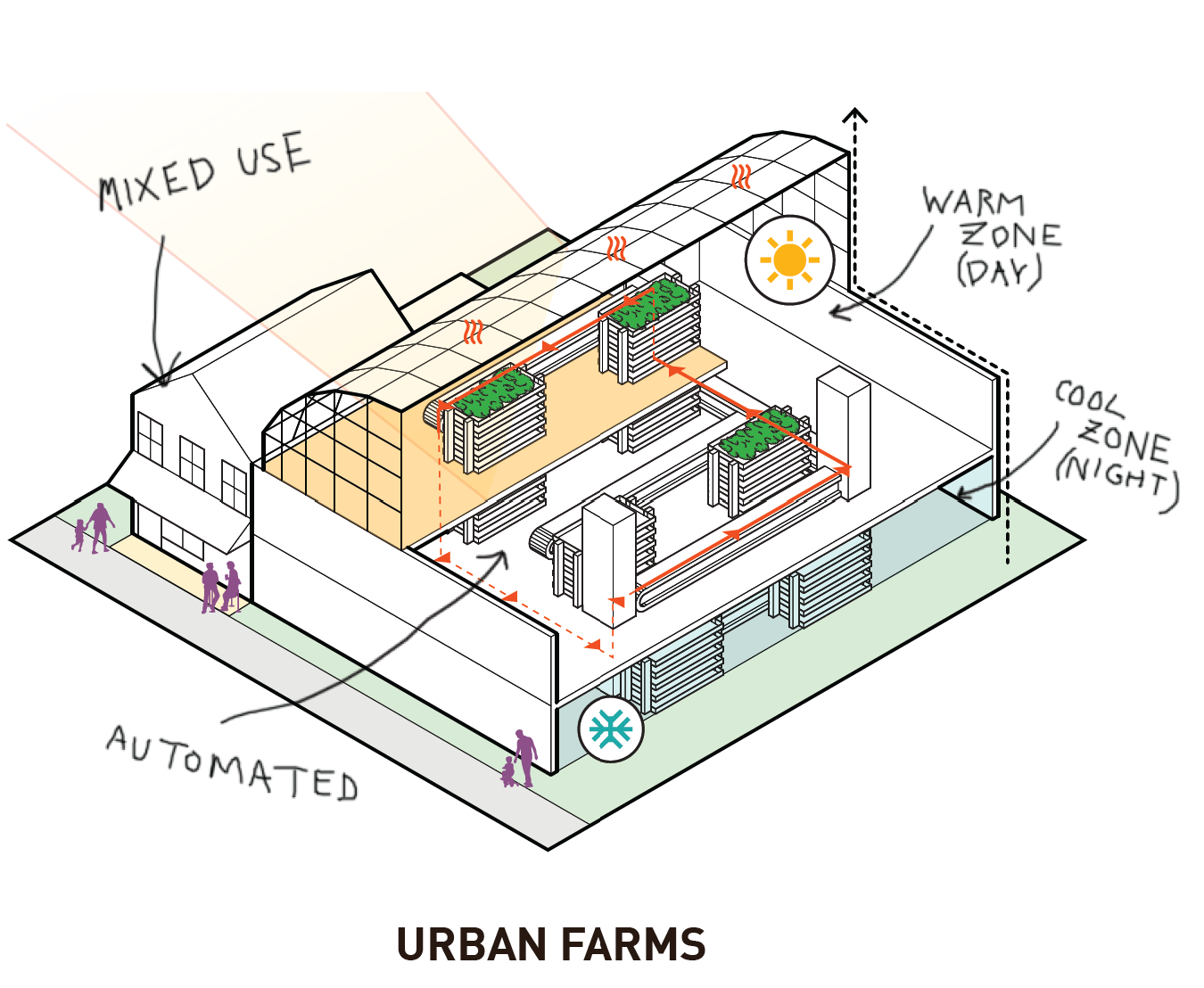
These operations produce no agricultural runoff, use less water than field farming, and can be hermetically sealed to contain odors. Yet when an entrepreneur attempts to open a farm in a vacant warehouse or a hollowed-out downtown office building, they collide with zoning codes that have not been updated since the mid-20th century. Building officials, lacking a specific category for "indoor vertical farm," often attempt to shoehorn the use into ill-fitting categories like "Warehousing," "Nursery," or "Light Industrial."
This regulatory ambiguity forces the project into a discretionary review process, where the outcome depends entirely on the subjective interpretation of local boards rather than clear, objective standards.
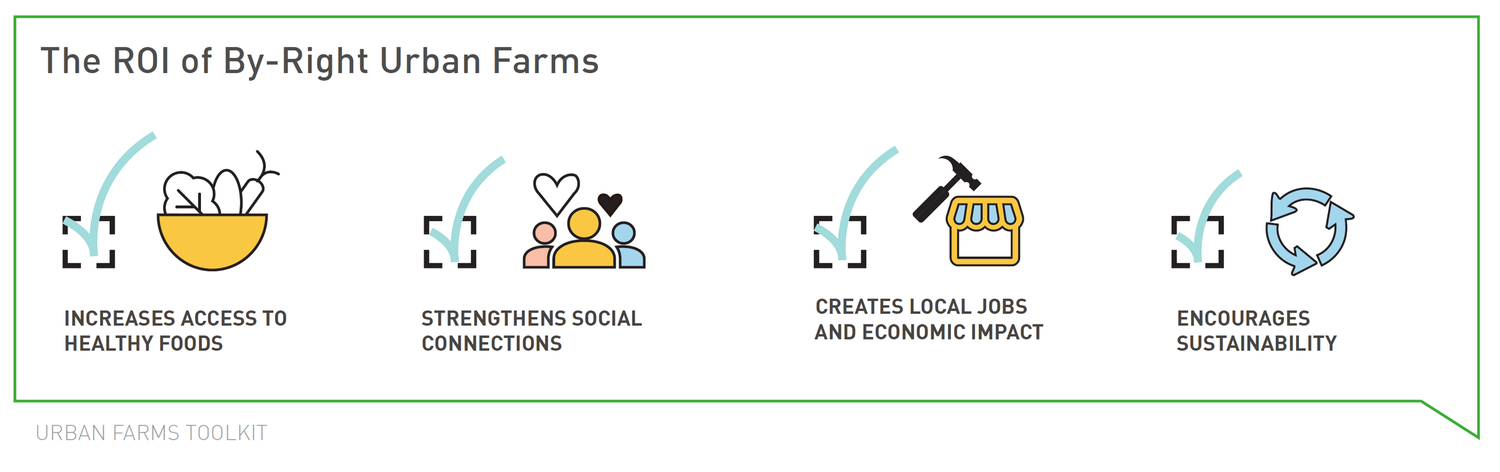
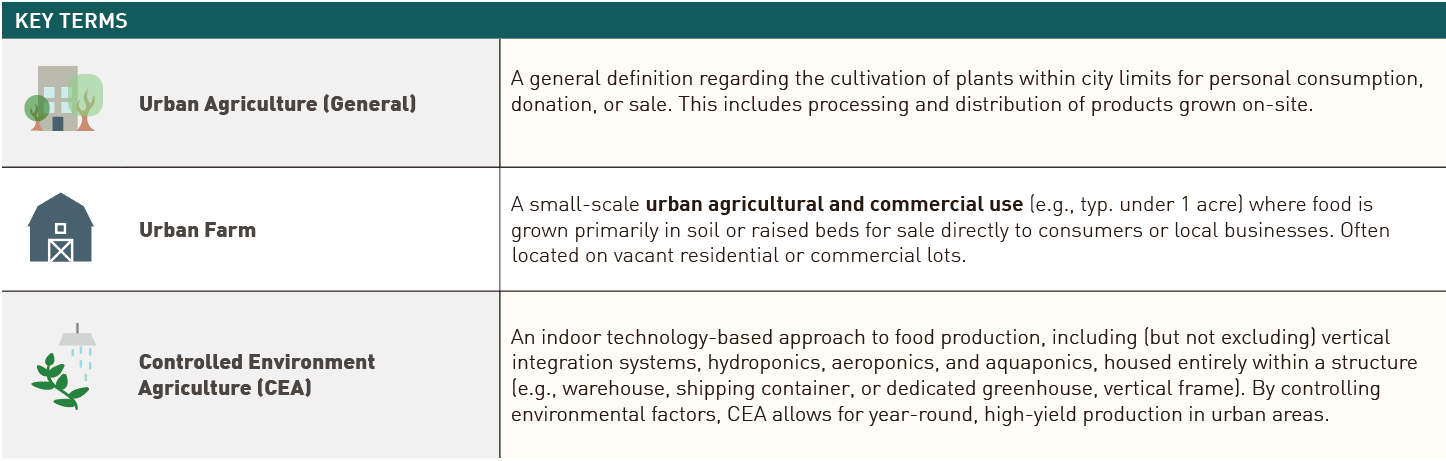
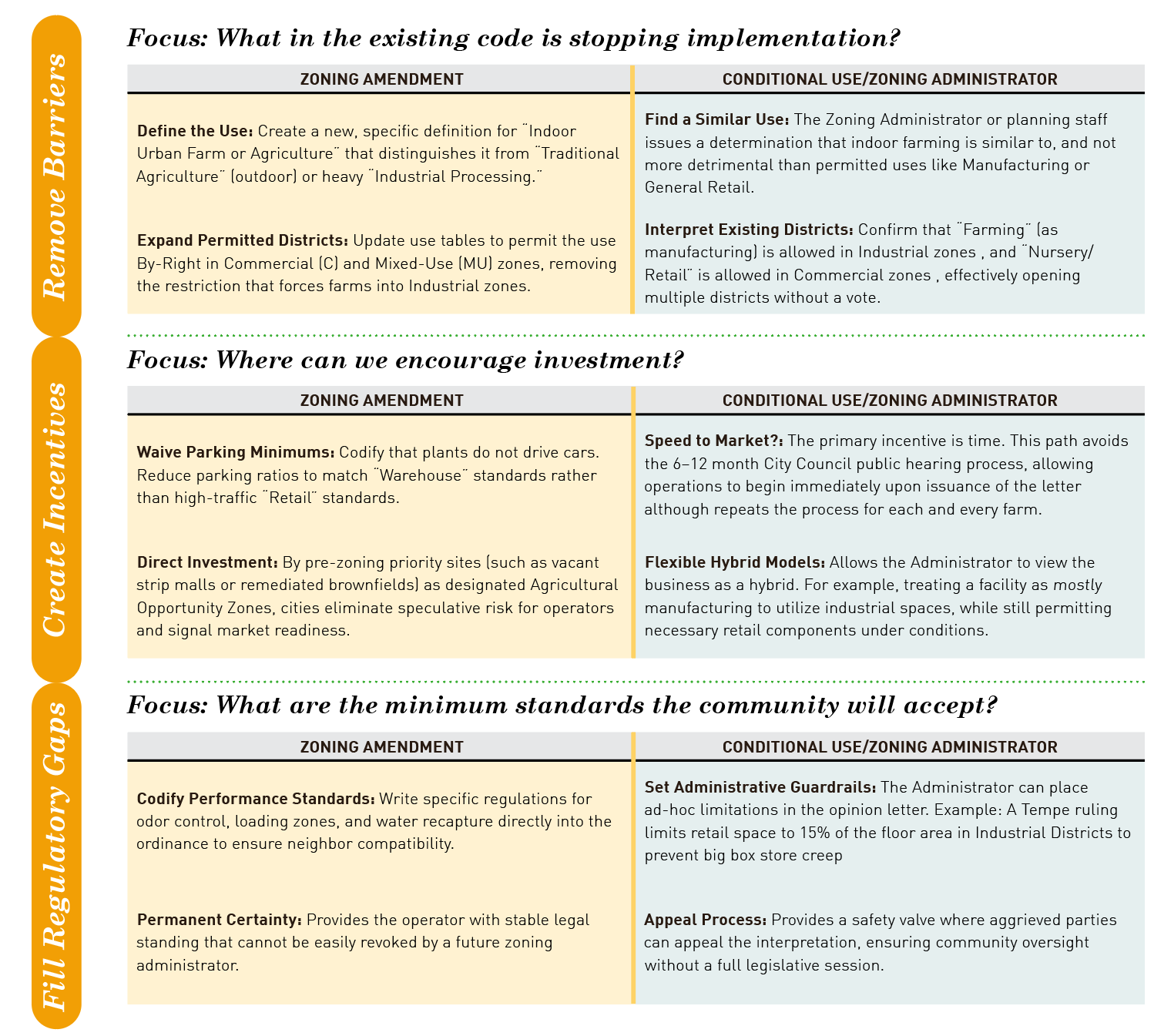
Beyond definitions, we provide the blueprint for change. The Urban Farms Toolkit equips municipalities across North America with a comprehensive playbook to modernize land use and integrate indoor agriculture into the fabric of their communities.
Download the Toolkit ↓Project Details
- Partner
- Area 2 Farms · Fairfax, VA
- Location
- North America
- Type
- Toolkit & Zoning Playbook
- Status
- Completed
Key Services
- Economic Development Strategies
- Development Scenario Planning
- Market Analysis
- Urban Design & Concepts
- Zoning Strategy & Policy Alignment