Indianapolis, Indiana
Key Services:
→ Community Engagement
→ Quality of Life Planning
→ Subarea/Neighborhood Planning
→ Urban Design & Concepts
→ Graphic Design
→ Implementation & Action Steps
Partners:
Northwest Landing
Vision Plan

What→
Proformus partnered with the Aspire Higher Foundation to develop the Northwest Landing Quality of Life Vision Plan, a shared guide for one of Indianapolis's near-northwest-side neighborhoods, ~435 acres and roughly 2,450 residents within the larger United Northwest Area, now steadying after decades of disinvestment. Shaped over eight months by more than 196 residents, business owners, and neighbors, the plan begins with an honest look at the neighborhood today and lays out a practical path to growth on its own terms, without pushing anyone out.
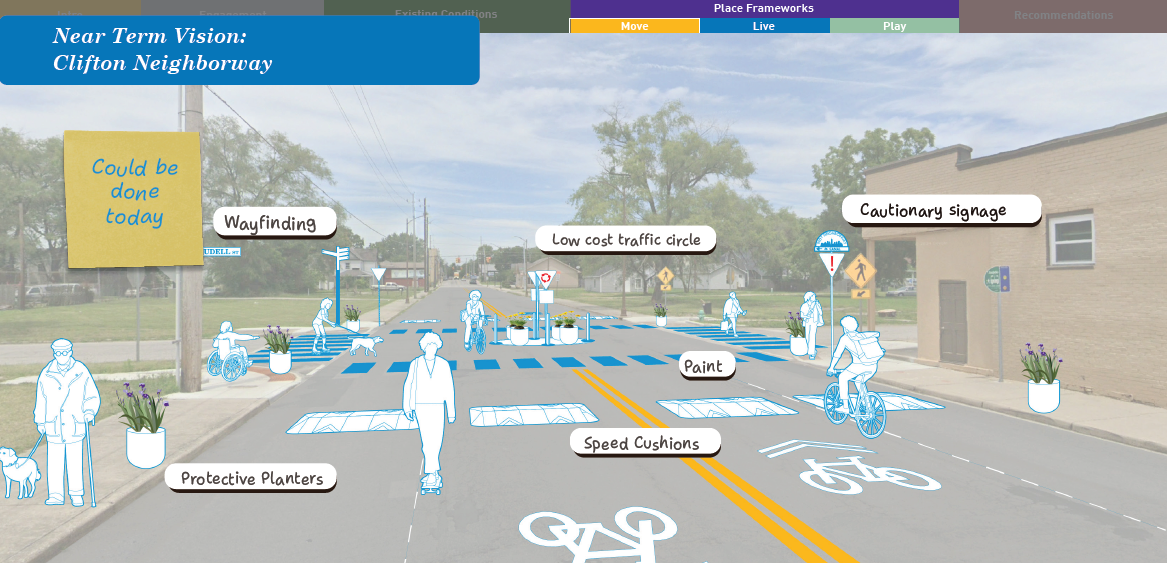
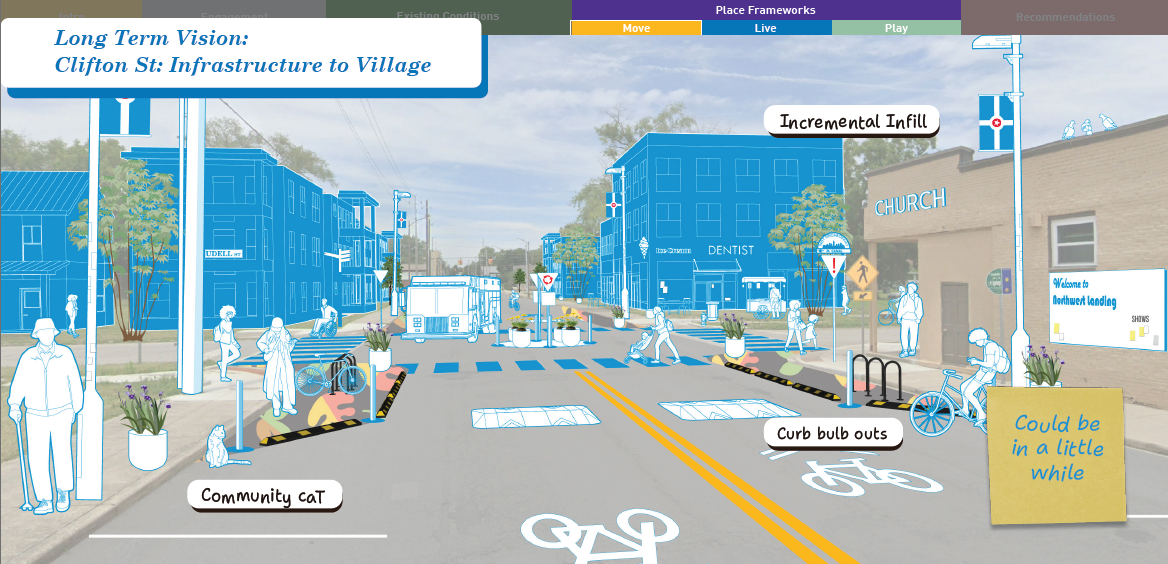
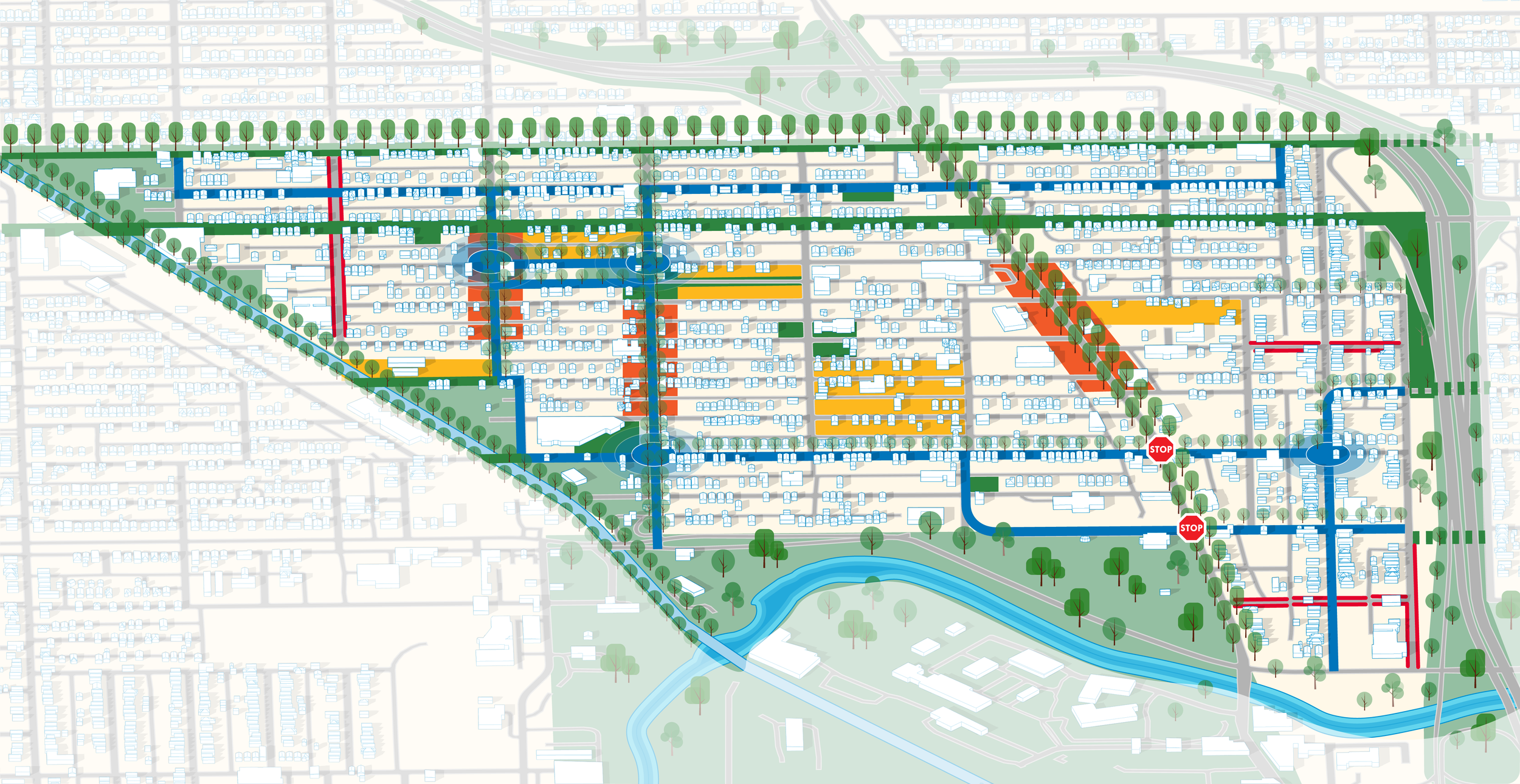
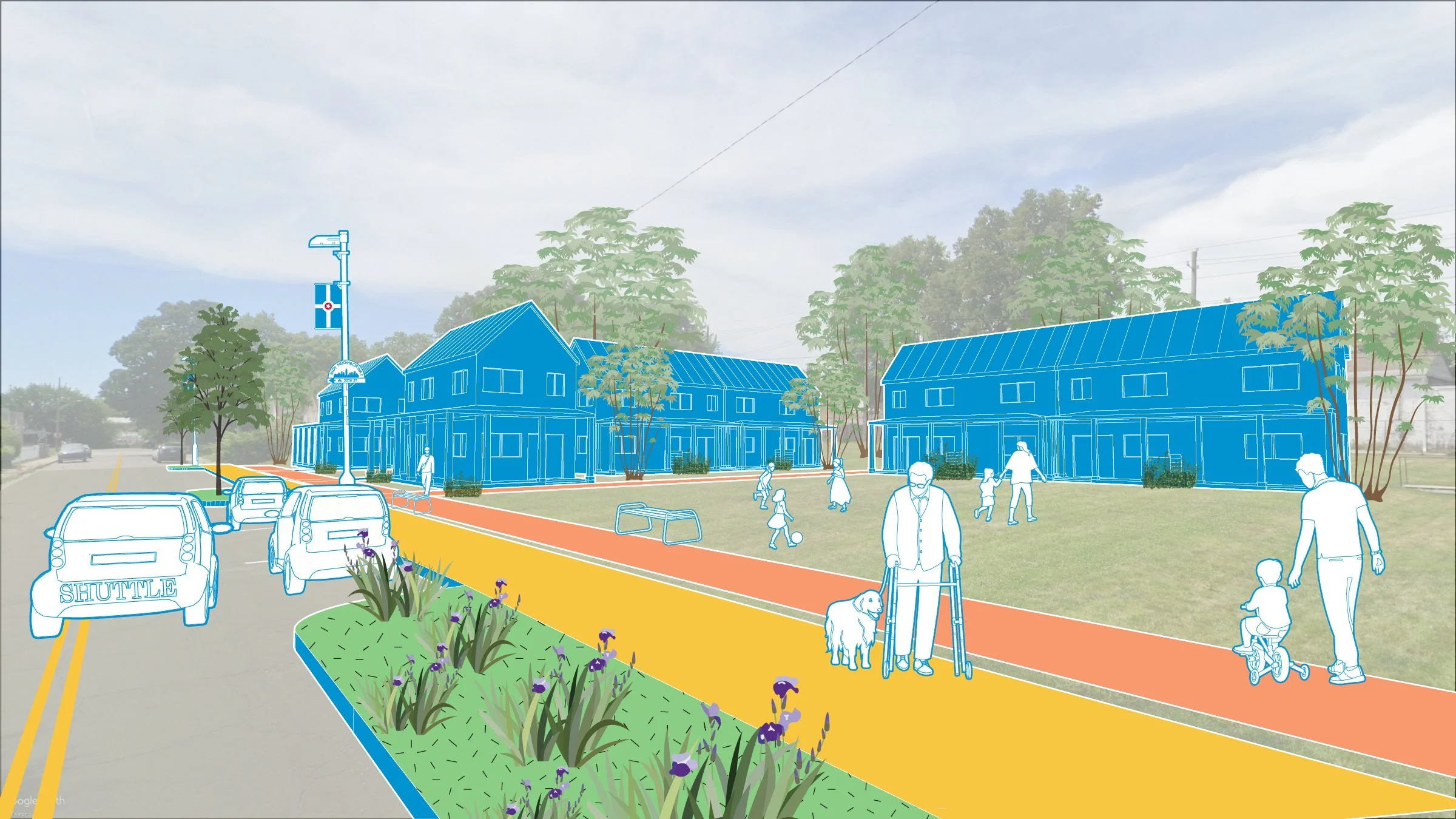
Our work translates that engagement into a spatial framework the neighborhood can build from: existing conditions and land use analysis, land-to-assessed-value mapping that pinpoints where small-scale reinvestment yields the most tax-base recovery, catalytic site identification, and Missing Middle infill scenarios on real parcels with real numbers. The strategy reads the neighborhood's fine grain (many small lots rather than a few large ones) and treats it as the asset it is: rehabilitation and incremental infill anchored by Flanner House and Aspire House, rather than the block-scale clearance that has repeatedly failed neighborhoods like this one. Organized around a Move / Live / Play place framework, the plan connects safer streets and Neighborways, housing and commercial infill, and a completed Kessler "Diamond Necklace" greenway into a single legible system — with a new Northwest Landing CDC positioned to convene the capital that carries it forward.
This collaboration reflects a conviction we share with our partners: that a vision plan should not just analyze conditions but change them. By tying every move back to what residents said they need (things like fresh food, walkable amenities, jobs that pay, and infrastructure that honors the neighborhood's character) the Northwest Landing Vision Plan helps a community that has endured decades of disinvestment see what its next chapter looks like, and who gets to write it.
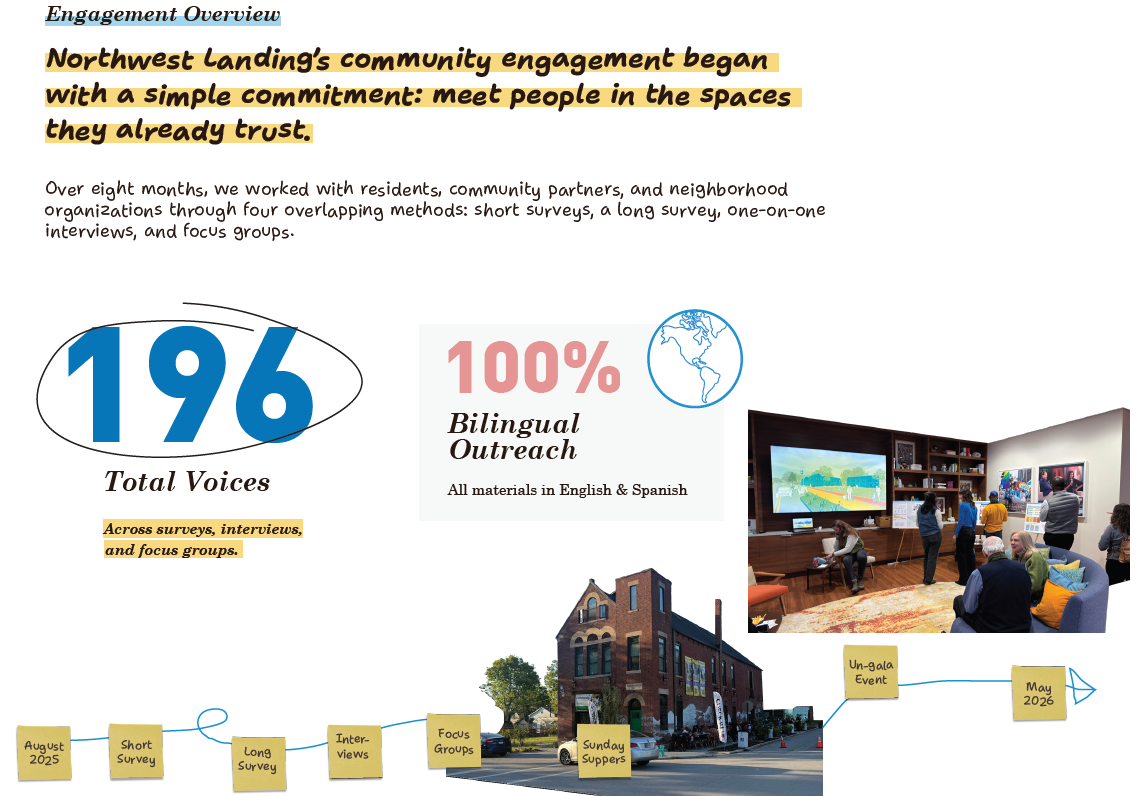
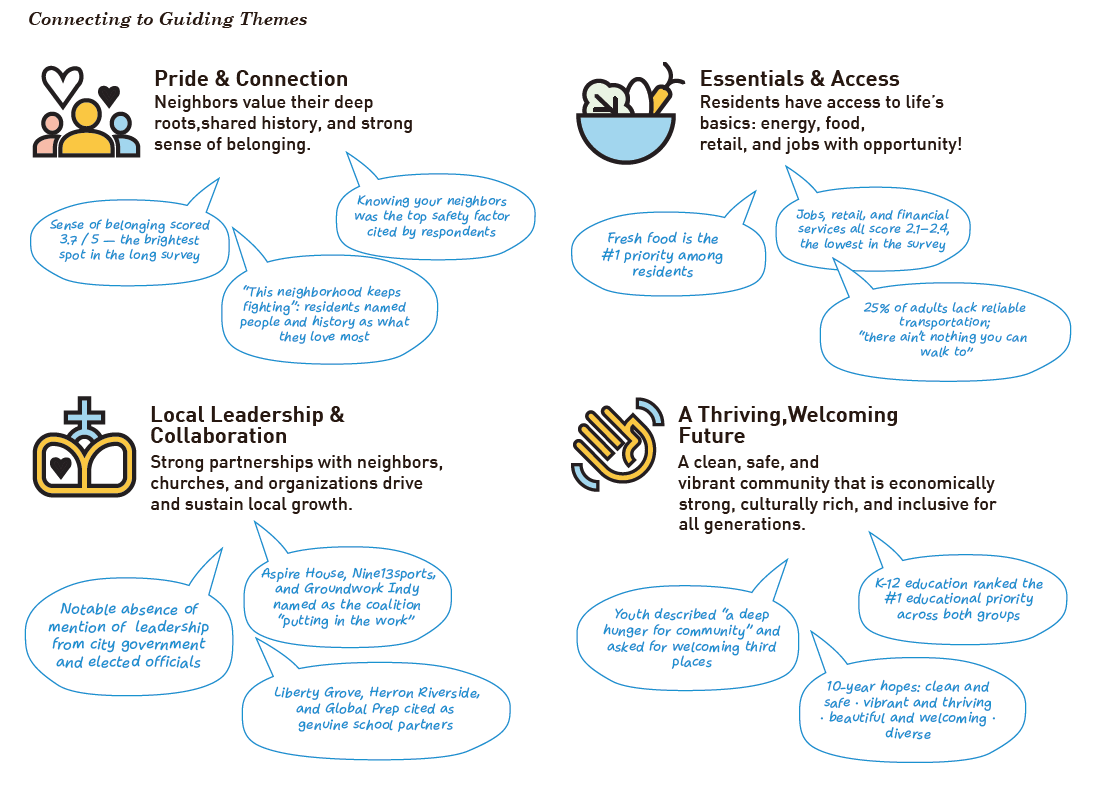
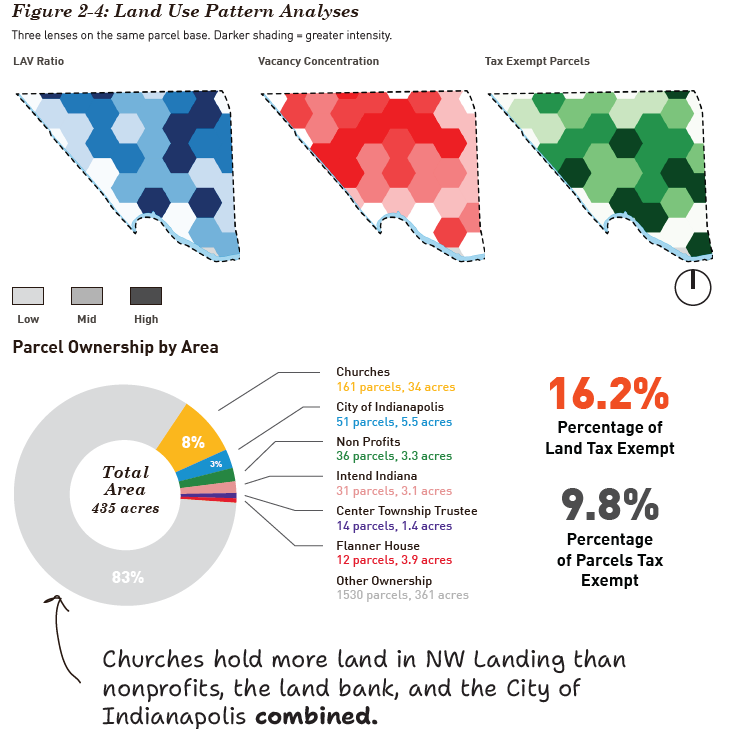
The Northwest Landing Quality of Life Vision Plan moves from listening to evidence to action. It starts where the neighborhood does: eight months of conversation with more than 196 residents, business owners, and neighbors — short and long surveys, one-on-one interviews, and focus groups held in the churches, senior housing, and on the doorsteps people already trust — read alongside an honest accounting of conditions on the ground, from vacancy and land-to-assessed-value ratios to social vulnerability and food access.
Together they pose the question the plan exists to answer: how does Northwest Landing grow on its own terms, without pushing anyone out?
Growth without displacement is the non-negotiable. It is the test every recommendation has to pass ,whether reinvestment compounds for the longtime residents who held the neighborhood together and keeps homes within reach, or quietly trades them out.
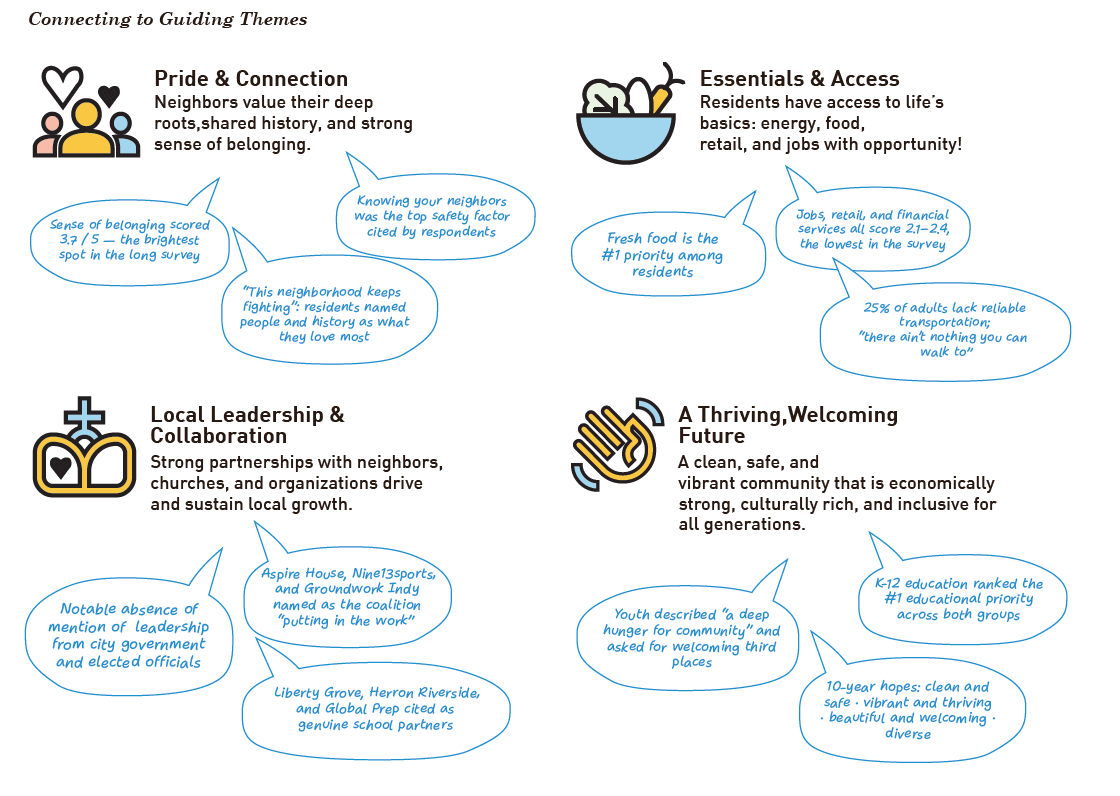
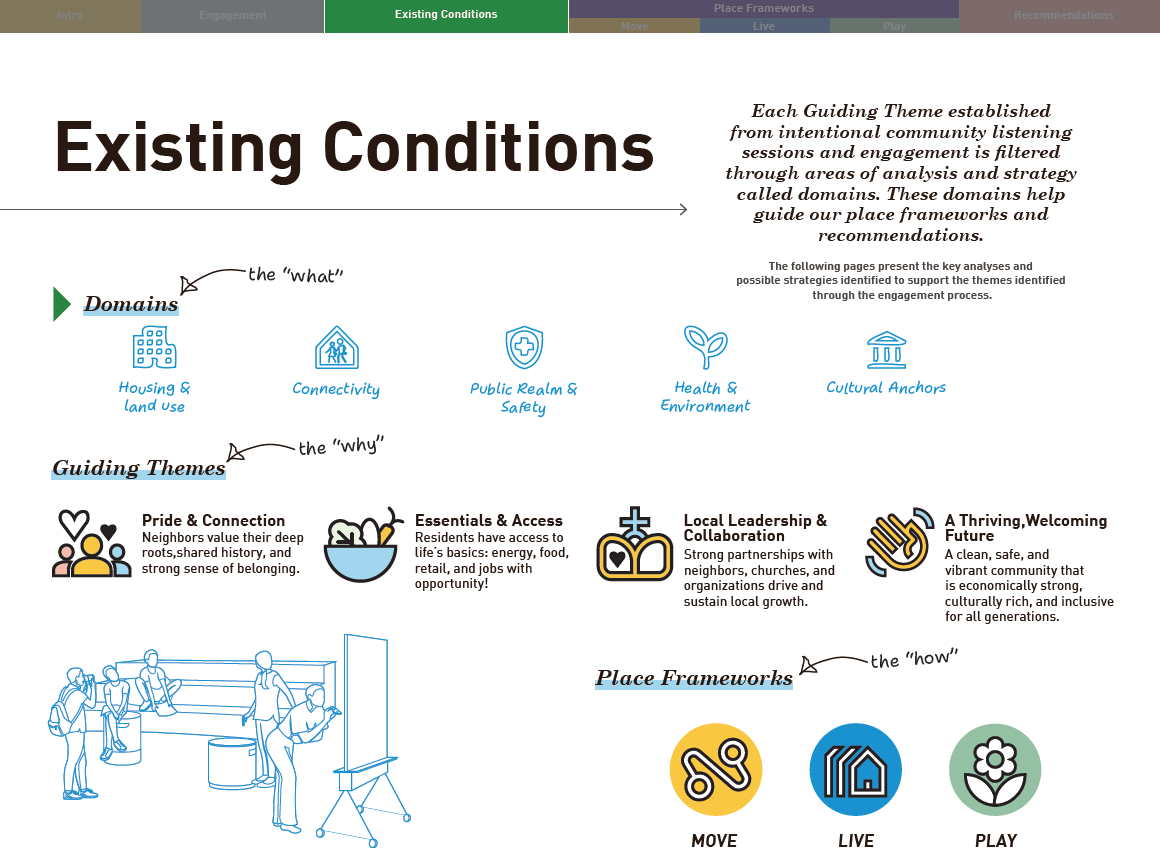
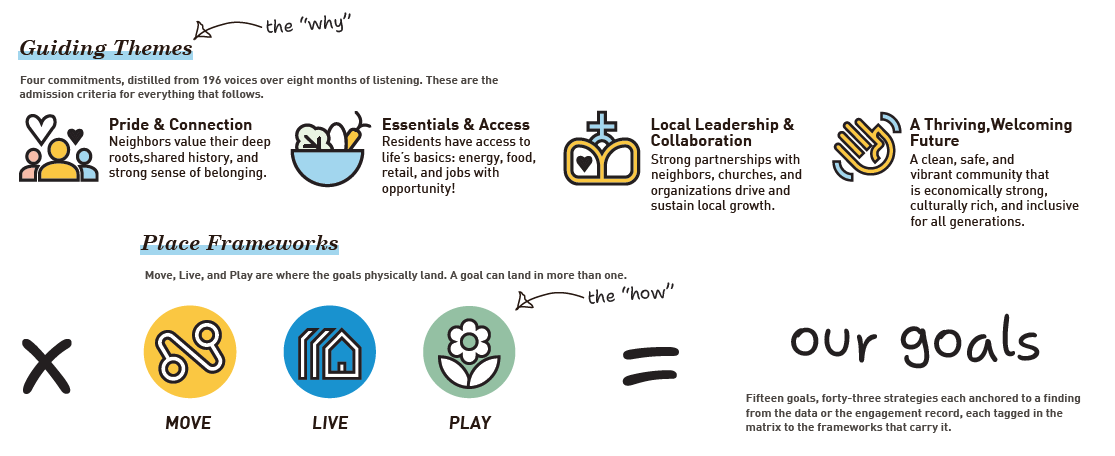
From there, four guiding themes (Pride & Connection, Essentials & Access, Local Leadership & Collaboration, and a Thriving, Welcoming Future) set the terms. Those themes resolve through three place frameworks (Move, Live, and Play) and a matrix of fifteen goals into a slate of fundable, parcel-level interventions: Missing Middle infill near Flanner House and Aspire House, calmed Neighborways and safer crossings, a completed Kessler "Diamond Necklace" greenway, and a neighborhood CDC built to carry the capital forward. Specific, grounded in the neighborhood's fine grain, and sized to what reinvestment can actually do block by block.
Planning Has Failed This Neighborhood Before.
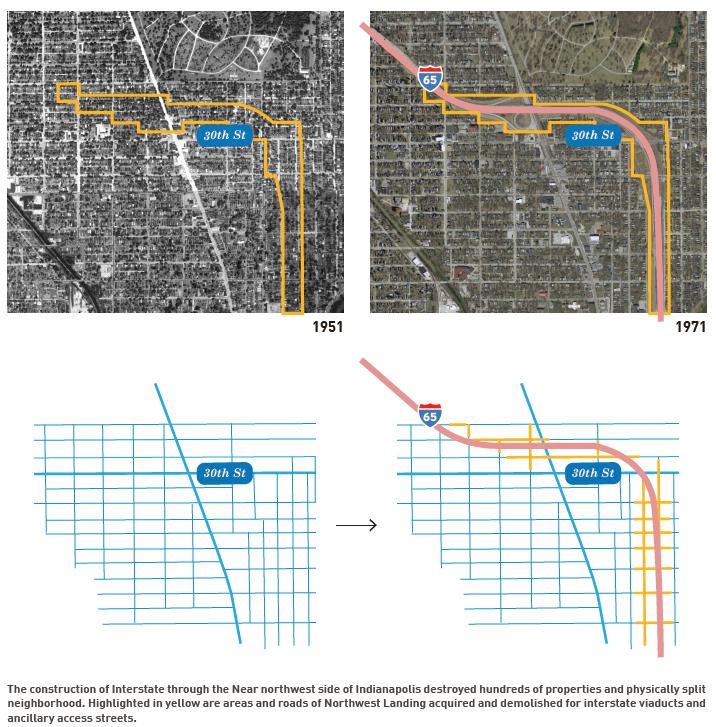
Like many other inner city neighborhoods throughout the United States, Northwest Landing has a complicated and fractured relationship with the highway that surrounds it. Interstate 65 was constructed in the late 1960s despite heavy community outcry from the predominantly Black neighborhood. Residents insisted the interstate be depressed to alleviate concerns that the future infrastructure would physically rip the neighborhood in two.
Despite over 3,000 signatures and a plea to the then-Governor Roger Branigin, the state proceeded with building I-65 as a fully elevated roadway through the United Northwest area. Planted atop tall grass viaducts, the interstate currently acts as both a figurative and actual wall between the neighborhood and Midtown Indianapolis to the east.